 ultimate-guide
Cyber Liability for Hotel Chains: 2026 Guide
Table of Contents
- Why Cyber Liability for Hotel Chains Is a Serious Business Risk
- What Cyber Liability Insurance Covers for Hospitality Businesses
- Cyber Liability Insurance Claim Examples from the Hospitality Sector
- PCI DSS Compliance Requirements for Hotels and Insurance Impact
- Cybersecurity Risk Assessment for Hotels: What Insurers Evaluate
- Regulatory Compliance and Privacy Laws Hotel Chains Must Know
- How the Cyber Insurance Claims Process Works for Hotel Groups
- Conclusion
Last Updated: August 13, 2026

Why Cyber Liability for Hotel Chains Is a Serious Business Risk
Cyber liability for hotel chains has moved from a niche insurance question to an operational emergency. Hotels sit at the intersection of high-volume payment processing, personal guest data, and 24/7 connectivity, making them one of the most targeted sectors in hospitality. Attackers target not just large brands but independent properties and mid-market groups with far fewer resources to respond.
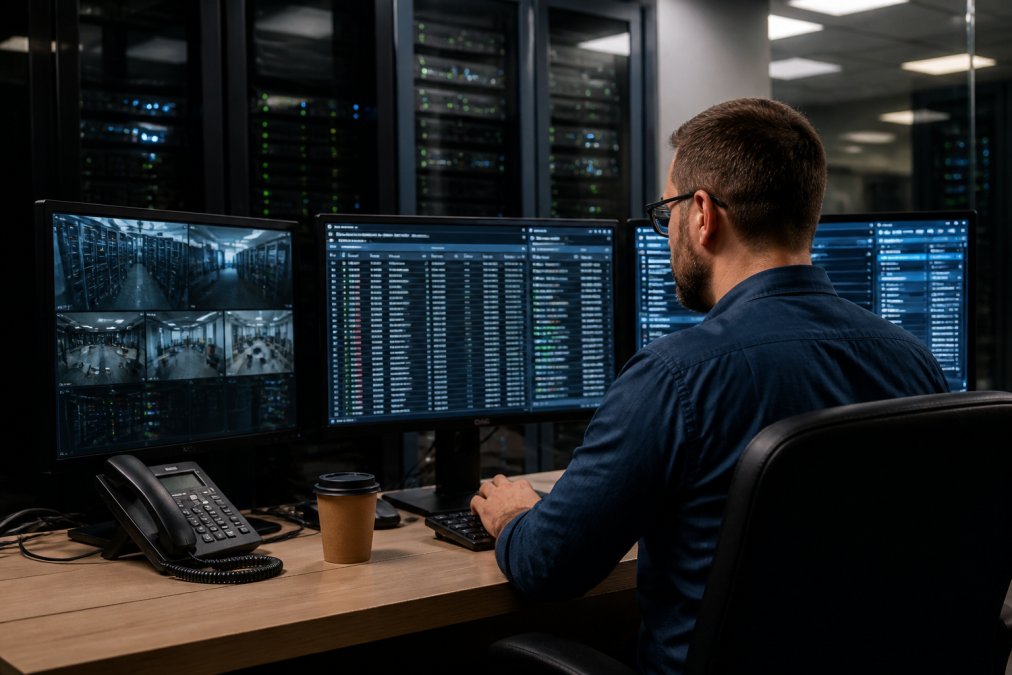
A hotel running a modern property management system, accepting credit cards, offering guest Wi-Fi, and managing loyalty accounts operates a data-rich environment rivaling financial institutions. When a breach occurs, financial loss extends beyond the immediate incident to notification costs, regulatory fines, and reputational damage.
The Data Hotels Collect and Why It Attracts Cybercriminals
Hotels collect unusually dense guest profiles: full name, home address, passport number, credit card data, travel patterns, and sometimes biometric credentials. This combination is more valuable on dark web markets than a standalone credit card number. A single breach involving thousands of guests produces thousands of complete identity profiles that cybercriminals can monetize repeatedly.
Point-of-sale systems at restaurants, spas, and front desks add another entry point for malware designed to skim payment card data. Phishing attacks targeting front desk staff are among the most effective initial access vectors in hospitality. According to the FBI Internet Crime Complaint Center annual report, the hospitality industry consistently ranks among the top sectors targeted by business email compromise and credential theft schemes.
IoT and Smart Room Vulnerabilities in Modern Properties
Smart rooms represent a genuine security gap. Modern hotel rooms increasingly include IoT-connected thermostats, smart locks, in-room tablets, and voice-controlled entertainment systems. Each device runs firmware, connects to the hotel network, and receives infrequent security updates.
A compromised smart device provides a foothold inside the hotel's internal network, enabling lateral movement toward the property management system or payment infrastructure. Many IoT devices share network segments with guest-facing systems, creating pathways that traditional perimeter security misses. Insurers increasingly ask specific questions about IoT device inventory and network segmentation during underwriting, with coverage gaps for properties that cannot answer clearly.
What Cyber Liability Insurance Covers for Hospitality Businesses
Cyber liability insurance is a specialized policy covering financial losses from digital threats, including data breaches, ransomware attacks, cyber extortion, and associated regulatory and legal costs. For hotels, coverage must map to the actual risk surface: payment systems, guest records, booking platforms, and third-party technology integrations.
Generic commercial insurance policies do not cover most cyber incidents. A ransomware attack shutting down a property management system for three days produces measurable business interruption losses that standard property policies will not pay.
First-Party vs. Third-Party Coverage
First-party coverage pays for losses the hotel itself suffers directly:
- Data recovery and system restoration costs
- Business interruption losses during network outages
- Ransomware payments and negotiation costs
- Forensic investigation to determine breach scope
- Notification costs for affected guests
- Crisis communications and public relations support
Third-party coverage addresses claims made against the hotel by others:
- Guest lawsuits arising from breach of their personal data
- Regulatory fines and penalties from state attorneys general or federal agencies
- Legal defense costs for failing to protect guest data
- Settlement funds for consumer redress programs
Most hotel operators need both. A breach exposing 10,000 guest records triggers first-party costs immediately and third-party exposure within weeks.
Ransomware, Business Interruption, and Cyber Extortion
Ransomware is the threat that keeps hotel IT directors awake. An attacker encrypts the property management system, reservation database, or point-of-sale network and demands payment to restore access. Every hour of downtime translates directly into lost revenue.
Cyber extortion coverage typically covers the ransom payment (subject to policy limits and OFAC compliance), negotiation costs from a specialist firm, and forensic work to verify decryption restores clean data. Business interruption coverage picks up revenue loss during restoration. Without both components, a hotel can pay the ransom and still face uninsured revenue losses.
Cyber Liability Insurance Claim Examples from the Hospitality Sector
Real-world examples illustrate what policies cover and where gaps appear.
Scenario 1: POS Malware at a Multi-Property Group A regional hotel group discovers malware on point-of-sale terminals across four properties. The malware had been present for weeks, capturing payment card data during each transaction. The cyber liability policy covered forensic investigation, PCI DSS forensic audit costs, card replacement notification, and regulatory fines assessed by card brands. Without the policy, costs could have threatened smaller properties in the portfolio.
Scenario 2: Ransomware Targeting a Cloud-Based PMS A boutique hotel chain running a cloud-based property management system receives a ransomware demand after an employee's credentials are compromised via phishing. The PMS is inaccessible for 72 hours. The cyber policy activates immediately: a breach response team handles negotiation, business interruption covers lost room revenue, and forensic confirmation shows no guest data was exfiltrated before ransom payment. The claims process resolved within the policy's 24-hour initial response window.
Scenario 3: Third-Party Booking Platform Breach A hotel's third-party online booking platform suffers a breach exposing guest reservation data. Though the breach originated with the vendor, the hotel faces regulatory scrutiny and guest complaints. Third-party cyber liability coverage funded legal defense and regulatory response.
Scenario | Primary Coverage Used | Key Cost Driver |
|---|---|---|
POS malware across 4 properties | First-party forensics + PCI fines | Card brand penalties and audit costs |
Ransomware on cloud PMS | Business interruption + extortion | 72-hour revenue loss + ransom negotiation |
Third-party booking platform breach | Third-party liability + legal defense | Regulatory response and guest notification |
PCI DSS Compliance Requirements for Hotels and Insurance Impact
PCI DSS, the Payment Card Industry Data Security Standard, governs how hotels must protect credit card data. Compliance is contractually required under merchant agreements. The PCI Security Standards Council's official guidance outlines technical and operational controls across 12 domains, from network security architecture to access control management.
PCI DSS requirements cover every system touching cardholder data: point-of-sale terminals, property management systems, network segments, and third-party processors handling card data on the hotel's behalf.
How PCI DSS Gaps Affect Your Premium and Coverage
Insurers treat PCI DSS compliance as a direct signal of risk maturity. A hotel unable to demonstrate current compliance faces materially higher risk profiles with real consequences:
- Higher premiums for properties with documented PCI gaps
- Coverage exclusions for breaches directly attributable to non-compliance
- Policy voidance risk if a hotel misrepresents compliance status during application
Common PCI DSS gaps insurers find include default credentials on POS terminals, inadequate network segmentation between guest Wi-Fi and cardholder data environments, and missing patch management processes. Addressing these gaps before applying directly affects policy terms and cost.
Cybersecurity Risk Assessment for Hotels: What Insurers Evaluate
A cybersecurity risk assessment for hotels is the foundation of underwriting decisions. Modern cyber insurance applications require detailed information about security architecture, incident history, and employee training programs.
Core evaluation areas include:
- Multi-factor authentication on all remote access systems and email platforms
- Endpoint detection and response tools deployed across hotel systems
- Backup integrity, whether backups are tested, air-gapped, and recoverable within defined timeframes
- Incident response plan, whether documented and tested
- Employee security training, frequency, format, and phishing simulation results
- Patch management, how quickly critical vulnerabilities are remediated
Properties scoring well across these dimensions qualify for broader coverage at lower premiums. Properties with gaps face higher costs or coverage limitations.
Third-Party Vendors and Supply Chain Exposure
A hotel's cyber risk extends beyond its network perimeter. Property management systems, booking engines, loyalty platforms, and point-of-sale systems are typically provided by third-party vendors. Each vendor relationship creates a supply chain exposure point.
Insurers increasingly ask for vendor risk management documentation: which third parties access guest data, what contractual security requirements exist, and how the hotel monitors vendor security posture. Cyber liability policies vary significantly in handling third-party-originated incidents, making this a critical coverage question before purchasing.
Regulatory Compliance and Privacy Laws Hotel Chains Must Know
Hotel chains operating across multiple states face overlapping privacy law obligations with real financial penalties for non-compliance.
Key frameworks include:
- California Consumer Privacy Act (CCPA) / CPRA: Grants California residents rights over personal data. Hotels with California guests or operations must maintain specific data handling practices and respond to consumer data requests within defined timeframes. The California Privacy Protection Agency's CPRA guidance details current enforcement priorities.
- State breach notification laws: All 50 states require breach notification. Timelines vary from 30 to 72 hours depending on data type. Hotel chains must comply with the most stringent applicable law.
- FTC Act Section 5: The Federal Trade Commission treats inadequate data security as an unfair or deceptive trade practice. Hotels that collect guest data and fail to implement reasonable security measures face FTC enforcement actions.
- HIPAA adjacency: Hotels operating spas or wellness facilities collecting health information may have HIPAA-adjacent obligations depending on data use and sharing.
Cyber liability policies including regulatory defense coverage pay for legal counsel and fines arising from these frameworks. Policies without this component leave hotels exposed to regulatory costs exceeding direct breach response costs.
How the Cyber Insurance Claims Process Works for Hotel Groups
The cyber insurance claims process for hotel groups begins the moment a breach is suspected, not confirmed. Waiting for certainty before notifying the insurer is one of the most common and costly mistakes.

The sequence works as follows:
- Immediate notification: Contact your insurer or breach response team as soon as an incident is suspected. Most policies require prompt notification; delay can jeopardize coverage.
- Breach response team activation: A specialized team takes over forensic investigation, legal coordination, and communications management.
- Scope determination: Forensic investigators determine what data was accessed, which systems were affected, and whether the attack is ongoing.
- Regulatory notification: Legal counsel determines which notification obligations apply and manages the timeline.
- Guest notification: Affected guests receive breach notification letters, often with credit monitoring offers funded by the policy.
- Recovery and remediation: Systems are restored, vulnerabilities are patched, and the incident response plan is updated.
- Claims settlement: The insurer processes covered costs against policy limits.
Best Cyber Insurance for Hotels structures coverage with 24-hour breach response access because attacks do not wait for business hours. A ransomware event beginning Friday night needs an activated response team by Saturday morning.
What 24-Hour Breach Response Support Actually Means
Genuine 24-hour breach response means a qualified incident response team answers the phone at 2 AM on a Sunday, begins forensic triage remotely within the hour, and has legal counsel available to advise on notification obligations before the property's own legal team arrives Monday morning. It means the hotel general manager has a single point of contact coordinating all response activities rather than managing multiple vendors independently during a crisis.
Before purchasing any cyber policy, ask for the specific response SLA and credentials of the team that will actually respond. According to the Cybersecurity and Infrastructure Security Agency's incident response guidance, the first hours of a cyber incident are most critical for containing damage and preserving evidence. A response team activating in hours rather than days materially changes the outcome.
Hotel operators face a threat environment growing in sophistication while response costs continue rising. Cyber liability for hotel chains requires coverage mapping to the actual risk surface: POS systems, IoT infrastructure, third-party vendors, and multi-state regulatory obligations. Best Cyber Insurance for Hotels provides specialized hospitality coverage with an instant quote process and 24-hour breach response team access, so your property has a structured, immediate response when an incident occurs. Get an instant quote and protect your guests, your data, and your business before the next attack finds an open door.
Frequently Asked Questions
What specific data breaches are covered under cyber liability insurance for hotels?
Cyber liability insurance for hotels typically covers breaches involving guest personally identifiable information (PII), credit card data, passport numbers, and loyalty program credentials. Coverage generally includes the cost of breach notification, credit monitoring for affected guests, legal defense, regulatory fines, and data recovery. Breaches originating from phishing attacks, malware, ransomware, compromised POS systems, and third-party vendor failures are all common covered scenarios, though exact terms vary by policy. Always review policy exclusions carefully before binding coverage.
Are ransomware attacks and business interruption costs covered by standard cyber policies?
Most cyber liability policies include coverage for ransomware payments and the costs of negotiating with attackers, though sub-limits often apply. Business interruption coverage reimburses lost revenue when hotel operations are disrupted by a cyber incident. Data recovery and system restoration costs are also typically included. However, coverage amounts, waiting periods before business interruption kicks in, and exclusions for pre-existing vulnerabilities vary significantly between insurers. Request a policy that explicitly lists ransomware and cyber extortion as covered perils.
How does PCI DSS compliance affect cyber liability insurance premiums for hotels?
Hotels that demonstrate current PCI DSS compliance are viewed as lower-risk by underwriters, which can result in more favorable premium pricing and broader coverage terms. Non-compliant properties may face higher premiums, reduced policy limits, or outright coverage exclusions related to payment card data breaches. Insurers conducting a cybersecurity risk assessment for hotels will ask for your most recent PCI DSS self-assessment questionnaire or Report on Compliance. Maintaining compliance is one of the most direct ways to manage your cyber insurance costs.
Is cyber liability insurance mandatory for hospitality businesses under state laws?
No federal law currently mandates cyber liability insurance for hotels, and no state law specifically requires hospitality businesses to carry it. However, state breach notification laws, including statutes in California (CCPA), New York (SHIELD Act), and others, create significant financial exposure if a breach occurs without coverage. Card brand agreements tied to PCI DSS also impose fines that cyber policies can offset. While not legally required, operating without coverage leaves hotel chains exposed to costs that can reach millions of dollars per incident.
How do hotel chains determine the appropriate limit of liability for cyber insurance?
Coverage limits should reflect the volume of guest records stored, the number of properties, annual payment card transaction volume, and potential regulatory fine exposure under applicable state privacy laws. A cybersecurity risk assessment for hotels helps quantify maximum probable loss across POS systems, property management systems, and loyalty databases. Multi-property chains face aggregated exposure, so per-occurrence and aggregate limits both matter. Work with a specialist insurer to model worst-case breach scenarios before selecting a limit.
What does a 24-hour breach response team actually do during an incident?
A dedicated breach response team coordinates the technical and legal response from the moment an incident is confirmed. This includes forensic investigation to identify how the breach occurred, legal counsel to advise on notification obligations under state privacy laws, public relations support to manage guest communications, and coordination with law enforcement if ransomware or cyber extortion is involved. For hotels hit at off-hours, immediate access prevents the delay that allows attackers to move laterally across systems and increases the total financial loss.
This article was written using GrandRanker