 ultimate-guide
Cyber Liability Insurance for Hospitality: A 2026 Guide
Table of Contents
- What Is Cyber Liability Insurance for Hospitality?
- Why Hotels Are High-Risk Targets for Cyber Attacks
- Types of Cyber Attacks Targeting Hospitality Businesses
- What Does Cyber Liability Insurance Cover?
- Exclusions: What Is NOT Covered
- Understanding Cyber Insurance Cost for Hotels
- Building a Data Breach Response Plan for Hospitality
- Cybersecurity Best Practices for Hospitality Operations
Last Updated: August 21, 2026
What Is Cyber Liability Insurance for Hospitality?
Cyber liability insurance for hospitality is specialized coverage protecting hotels from financial losses due to data breaches, ransomware attacks, and digital security incidents. Unlike standard property or general liability policies, it addresses vulnerabilities unique to hospitality operations, particularly systems handling guest payment information, personal identification data, and reservations.
Hotels store guest names, addresses, phone numbers, emails, and payment card data in property management systems (PMS). Point-of-sale (POS) terminals process thousands of daily transactions. Booking engines collect personal information from guests worldwide. When a breach occurs, costs extend far beyond the incident itself: notification expenses, forensic investigation fees, regulatory fines, credit monitoring services, and reputational damage can exceed hundreds of thousands of dollars. Most general insurance policies don't cover these cyber-specific losses.
Why Hotels Are High-Risk Targets for Cyber Attacks
Hotels present attractive targets for cybercriminals. Your business model requires collecting, storing, and processing sensitive guest information at scale. You operate 24/7, meaning systems are always running and potentially vulnerable. Multiple connection points, front desk systems, housekeeping tablets, in-room entertainment, WiFi networks, each represent vulnerabilities. A successful breach exposes tens of thousands of guest records. Payment card information and stolen passport numbers have clear resale value on the dark web.
POS and PMS System Vulnerabilities
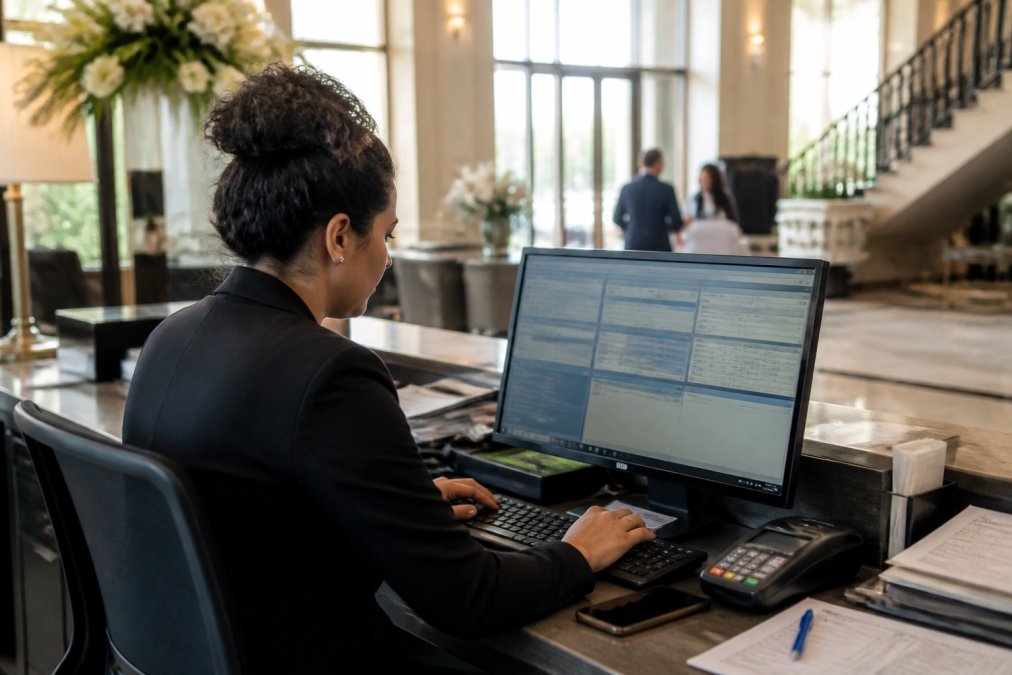
Property management systems and point-of-sale terminals are prime targets. These systems integrate with payment processors, guest databases, and accounting software. A vulnerability in any component can cascade through your entire operation.
PMS systems often run on older infrastructure not designed for modern security threats. Many hotels operate legacy systems because replacement is expensive and disruptive. These platforms receive infrequent security patches, may not support multi-factor authentication, and sometimes communicate using unencrypted connections. POS terminals are distributed across your property, front desk, restaurants, poolside bars. Each is a potential entry point. Integration between systems creates additional risk, as each connection is a potential vulnerability.
Guest Data as a Premium Target
Guest information is one of the most valuable commodities on the dark web. A complete guest record, name, address, phone, email, passport number, payment card information, sells for significantly more than a single payment card number. Hotels maintain international guest data, which is particularly valuable because it represents multiple regulatory jurisdictions. Repeat guest profiles are especially valuable, as they include complete travel history, preferred room types, and stored payment methods.
Types of Cyber Attacks Targeting Hospitality Businesses
Ransomware attacks are the dominant threat. An attacker gains network access, encrypts critical systems, and demands payment for the decryption key. In hospitality, ransomware is particularly damaging because your PMS is essential to operations. A ransomware attack on a 200-room hotel during peak season can cost tens of thousands daily in lost revenue (peer-reviewed research).
Phishing and social engineering exploit human behavior. An attacker sends an email appearing to come from corporate offices or trusted vendors, asking employees to click links or enter credentials. Once attackers have legitimate credentials, they move through your network with minimal resistance.
Data exfiltration attacks steal data without encrypting systems or demanding ransom. An attacker might spend weeks inside your network, quietly copying guest records and payment information. You may not discover the breach until weeks or months later.
Third-party compromise occurs when attackers target vendors your hotel uses. Your booking engine provider, payment processor, or cloud backup service could be compromised, giving attackers access to your systems.
Payment card fraud and skimming remain persistent threats. Attackers place skimming devices on POS terminals or inject malware into payment systems to capture card data during transactions.
What Does Cyber Liability Insurance Cover?
Cyber liability insurance for hospitality typically covers costs arising from data breaches and cyber attacks.
Incident response and forensic investigation is usually covered. When a breach occurs, you need specialized forensic experts to determine what happened, what data was accessed, and how attackers gained entry. These investigations can cost tens of thousands of dollars.
Notification costs are frequently covered. Most states require notifying affected individuals if their personal information is compromised (the CDC). For a hotel with thousands of affected guests, notification costs alone can exceed $50,000.
Regulatory fines and penalties may be covered, depending on your policy.
Business interruption coverage reimburses lost revenue if a cyber attack forces you to close operations or limit services.
Liability coverage protects you if guests sue because their personal information was compromised.
Cyber extortion coverage reimburses ransom payments and negotiation costs if targeted by ransomware or extortion attacks. This is critical for hospitality because ransomware is the most common threat.
First-Party vs. Third-Party Coverage
First-party coverage addresses costs your hotel incurs directly from a cyber incident. This includes forensic investigation, notification expenses, credit monitoring services, business interruption losses, ransom payments, and recovery costs.
Third-party coverage addresses claims made against your hotel by others. If a guest sues because their payment card information was stolen in a breach at your hotel, that's a third-party claim. Most cyber liability policies include both types of coverage, but limits and deductibles differ.
Exclusions: What Is NOT Covered
Cyber liability insurance has significant exclusions.
Prior knowledge exclusions are common. If you knew about a vulnerability before the policy effective date, the insurer won't cover losses from that vulnerability.
Failure to maintain security standards may void coverage. If your hotel failed to implement basic security measures like keeping systems patched, using multi-factor authentication, or maintaining firewalls, the insurer might deny your claim.
Regulatory fines and penalties are often excluded, depending on your policy.
Contractual liability is sometimes excluded. If you've contractually agreed to indemnify a third party for losses from a breach, your cyber insurance might not cover that obligation.
Cyber attacks by employees or contractors may be excluded or limited.
Gradual data loss or degradation is typically excluded. Cyber insurance covers sudden, acute incidents, not slow data corruption over time.
The specific exclusions depend on the insurer and policy form. Working with an agent who understands hospitality-specific cyber insurance clarifies exactly what's covered and excluded before purchase.
Understanding Cyber Insurance Cost for Hotels
The cost of cyber liability insurance for hospitality varies based on factors specific to your property.
Property size and revenue influence pricing. A 50-room boutique hotel pays differently than a 500-room resort.
Security posture affects your premium significantly. Hotels maintaining current security standards, implementing multi-factor authentication, and conducting regular security audits typically qualify for better rates.
Claims history impacts pricing. Previous breaches or cyber incidents increase your premium.
Data retention practices matter. Hotels retaining guest data longer than necessary face higher risk.
Third-party integrations affect your risk profile. Hotels using many booking engines, payment processors, and cloud services have more vulnerability points.
Geographic location and regulatory environment influence pricing. Properties in states with strict data privacy laws may face different pricing than those in states with less stringent requirements.
For specific pricing tailored to your property, Best Cyber Insurance for Hotels provides an instant quote process evaluating your actual risk factors.
Building a Data Breach Response Plan for Hospitality
A data breach response plan is your operational roadmap when a cyber incident occurs. Without a plan, your response becomes reactive and chaotic. Your response plan should identify key personnel and their roles. Who is your incident commander? Who handles communication with law enforcement? Who manages guest notification? Who coordinates with your cyber insurance carrier?
Your plan should include communication protocols for different audiences: staff, guests, law enforcement, regulatory agencies, your insurance carrier, and potentially media. Pre-identify a reputable forensic firm and establish a relationship before a breach happens. Include your cyber insurance contact list, policy number, account representative's contact information, and the 24-hour claim hotline.

Incident Response Steps and Timeline
A typical data breach response follows a structured timeline.
Hours 0-2: Initial Detection and Containment Isolate affected systems from your network to prevent further data loss. Identify what systems are affected and what data might be at risk. Contact your cyber insurance carrier immediately; many policies require prompt notification.
Hours 2-6: Forensic Investigation Begins Your forensic team preserves evidence and determines the breach scope. They analyze affected systems, identify the attack vector, and determine what data was accessed.
Hours 6-24: Notification Planning Once you understand the breach scope, determine who must be notified. If personal information was accessed, you're likely required to notify affected individuals.
Days 2-7: Regulatory Notification Depending on breach scope and affected states, you may need to notify state attorneys general or data protection offices.
Days 7-30: Guest Notification You notify affected guests through mail, email, or phone, typically offering credit monitoring services.
Days 30-90: Forensic Completion and Recovery Your forensic investigation concludes with a detailed report. You remediate the vulnerability allowing the breach and implement security improvements.
Days 90-365: Monitoring and Follow-up You monitor for ongoing attacks or unauthorized access and track credit monitoring enrollments and fraud claims.
Regulatory Notification Requirements
Data breach notification laws vary by state, but most require notifying affected individuals if their personal information is compromised.
Timing requirements typically mandate notification without unreasonable delay. Most states specify 30 to 60 days from breach discovery.
Content requirements specify what you must include in notification. You must describe the breach, explain what information was accessed, and provide guidance on protective steps.
Method requirements specify how you must notify affected individuals. Most states allow notification by mail, email, or phone.
Regulatory agency notification is required in some states. You may need to notify the state attorney general or data protection office.
For a hotel with 10,000 affected guests, notification costs might include mailing expenses, email campaign costs, credit monitoring services, and legal counsel fees (peer-reviewed research). Your cyber liability insurance typically covers all these costs.
Cybersecurity Best Practices for Hospitality Operations
While cyber liability insurance provides financial protection, the best strategy is preventing incidents. Strong cybersecurity practices reduce your risk, lower insurance premiums, and protect your guests.
Multi-factor authentication is foundational. Require all staff to use multi-factor authentication when accessing systems containing guest data or payment information.
Regular security patches are essential. Establish a process for applying security updates to all systems.
Network segmentation isolates critical systems. Your PMS shouldn't be on the same network segment as guest WiFi.
Employee security training reduces phishing and social engineering attacks. Regular training on identifying phishing emails, protecting passwords, and reporting suspicious activity makes your staff your first line of defense.
Incident response planning prepares your team for when incidents occur. Practice your response plan annually through tabletop exercises.
Vendor management extends security beyond your direct control. Require vendors to maintain security standards and provide evidence of their security practices.
Data minimization reduces your exposure. Don't retain guest payment card information longer than necessary.
Backup and disaster recovery ensures recovery from ransomware attacks. Maintain regular backups of critical data stored offline or in separate network segments.
The hospitality industry faces unprecedented cyber threats. Guest data is valuable, your systems operate 24/7, and attackers know hotels often prioritize getting back online quickly. Cyber liability insurance for hospitality isn't optional, it's essential protection.
The right policy covers forensic investigation costs, notification expenses, regulatory compliance obligations, and liability if guests sue. It provides access to specialized incident response expertise when you need it most. Most importantly, it ensures a cyber incident doesn't become an existential threat to your business.
Get an instant quote from Best Cyber Insurance for Hotels and discover how specialized cyber liability coverage protects your property. With 24-hour access to a dedicated breach response team and coverage designed specifically for hospitality operations, you'll have the protection and support your hotel needs when a cyber incident strikes.
Frequently Asked Questions
What does cyber liability insurance for hospitality actually cover?
Cyber liability insurance for hospitality covers data breaches, ransomware attacks, business interruption losses, forensic investigation costs, notification expenses, regulatory fines, and third-party liability claims. First-party coverage protects your direct losses; third-party coverage handles claims from guests or other parties. Coverage typically includes incident response support, legal fees, credit monitoring for affected guests, and public relations costs. Your specific coverage depends on your policy limits and the underwriting assessment of your property's security posture.
How much does cyber insurance cost for hotels?
Cyber insurance cost for hotels varies based on property size, revenue, security measures, prior claims history, and coverage limits. Boutique properties with 50 rooms typically pay less than large chains, but premium depends on your specific risk profile. Best Cyber Insurance for Hotels provides instant quotes tailored to your property's needs and vulnerabilities. Contact us for a personalized quote that reflects your actual exposure and security investments.
Is cyber liability insurance worth the extra cost compared to bundling with general liability?
Yes. General liability policies explicitly exclude cyber attacks, data breaches, and ransomware. Bundling cyber coverage with a general provider often means either no actual cyber protection or inadequate limits. Specialized cyber liability insurance for hospitality includes forensic investigation, breach response teams, regulatory compliance support, and ransom negotiation services that general policies do not provide. The cost difference is justified by the targeted protection your property actually needs.
What should a data breach response plan for hospitality include?
A data breach response plan for hospitality must include immediate notification procedures, contact information for your cyber insurance incident response team, steps to isolate affected systems, guest communication templates, regulatory notification timelines (within 30-60 days depending on state law), documentation of the breach scope, forensic investigation coordination, and credit monitoring activation for affected individuals. Your plan should address POS and PMS system breaches specifically, identify who authorizes ransom decisions, and outline communication with law enforcement and state attorneys general.
What cybersecurity best practices for hospitality reduce insurance premiums?
Cybersecurity best practices for hospitality that lower premiums include network segmentation separating guest-facing systems from payment processing, multi-factor authentication for staff access, regular security awareness training focusing on phishing and social engineering, encryption of stored guest data, PCI DSS compliance for payment card data, regular penetration testing, endpoint detection and response (EDR) tools, and incident response plan documentation. Properties demonstrating strong security posture and employee training typically qualify for better rates and faster underwriting.
Does cyber insurance cover ransomware payments and recovery costs?
Most cyber liability insurance policies cover ransomware incident response, forensic investigation, and negotiation services. However, whether the policy covers the actual ransom payment depends on your specific coverage limits and policy wording. Many policies cover recovery costs, system restoration, business interruption losses during downtime, and notification expenses. Ransom payments themselves may be excluded or limited. Your policy should clearly define what costs are covered and what limits apply, which Best Cyber Insurance for Hotels specialists can explain during the quote process.
How does cyber insurance respond to a ransomware attack on hotel property management systems?
When ransomware hits your PMS, your cyber insurance policy typically triggers immediate access to your dedicated breach response team available 24 hours. They coordinate forensic investigation to identify the attack vector, assess encrypted data scope, and advise on containment. The policy covers investigation costs, temporary business continuity solutions, system restoration, guest notification, regulatory compliance, and negotiation with threat actors if ransom demands occur. Your response team coordinates with law enforcement and manages communication with guests and state authorities while your IT team works on recovery.
What is the difference between first-party and third-party cyber coverage?
First-party cyber coverage protects your direct losses: forensic investigation, notification costs, credit monitoring, business interruption, ransom payments, and recovery expenses. Third-party coverage protects you against liability claims from guests or business partners whose data was breached, including legal defense costs, settlements, and judgments. Both are essential for hotels. First-party coverage keeps your business running after an incident; third-party coverage protects your assets from guest lawsuits and regulatory actions. Comprehensive cyber liability insurance includes both.
This article was written using GrandRanker