 ultimate-guide
Hotel Data Breach Recovery Costs: 2026 Breakdown
Table of Contents
- Why Hotel Data Breach Recovery Costs Outpace Other Industries
- Breaking Down the True Cost of a Hospitality Data Breach
- Hotel Data Breach Notification Requirements by State
- Does Cyber Insurance Cover Ransomware and Recovery Costs?
- The Hidden Cost of Guest Churn After a Breach
- Cost Scaling: Boutique Hotels vs. Large Chains
- How to Reduce Your Recovery Costs With a Breach Response Plan
- Conclusion
- Frequently Asked Questions
Last Updated: September 5, 2026
Why Hotel Data Breach Recovery Costs Outpace Other Industries
When a hotel suffers a data breach, the hotel data breach recovery costs are rarely comparable to those in retail or finance. The hospitality industry carries a unique liability burden: you process payment card data, passport numbers, and personally identifiable information (PII) for guests who are transient and often protected by strict data privacy regulations. At Best Cyber Insurance for Hotels, we have watched properties absorb expenses that would bankrupt smaller operations, and the pattern is consistent: the recovery phase, not the attack itself, is where budgets collapse.
Data breach recovery costs are the total expenses incurred after a cybersecurity incident, spanning forensic investigation, legal defense, regulatory fines, notification, and lost business revenue. According to IBM's Cost of a Data Breach Report, the global average cost per breach continues to climb year over year, and the hospitality sector consistently ranks among the most expensive to remediate due to the volume of third-party data involved.
The reason is operational. Hotels run 24/7. A compromised property management system (PMS) that handles guest payments cannot simply be taken offline for a week without catastrophic revenue loss. Unlike a retailer who can close a storefront, a hotel with 300 occupied rooms must keep doors open, staff paid, and guests checked in while forensic teams work around the clock. That urgency inflates every line item on the recovery invoice.
Breaking Down the True Cost of a Hospitality Data Breach
The data breach recovery costs for a hotel are not a single expense. They arrive as a cascade of distinct charges, each with its own timeline and vendor. Understanding the breakdown is the first step toward building a realistic budget and negotiating coverage before an incident occurs.
| Cost Category | Primary Driver | Typical Timing |
|---|---|---|
| Forensic Investigation | Identify breach source and scope | First 30 days |
| Incident Response | Containment and system restoration | First 60 days |
| Business Interruption | Downtime and lost reservations | Ongoing |
| Notification | State law compliance | First 90 days |
| Legal Defense | Lawsuits and regulatory defense | 6-24 months |
| Guest Retention | Churn and reputation recovery | 12+ months |
Forensic Investigation and Incident Response Fees
The first invoice a hotel receives after detecting a breach is almost always from a forensic investigator. Data breach forensic investigation costs are the fees paid to cybersecurity firms to determine how the attacker gained access, what data was exfiltrated, and whether the threat is fully neutralized. These firms charge premium hourly rates, and a hospitality investigation typically takes weeks because the forensic team must audit the PMS, Wi-Fi networks, and third-party vendor access points simultaneously.
Incident response fees cover the containment effort: isolating infected systems, rebuilding servers, and restoring data from backups. For a hotel chain operating multiple properties, the response scales across every location that shares the compromised network. A common mistake is assuming your IT staff can handle containment internally. Most property management systems are third-party platforms, and the vendor will often require an external forensic firm to validate the scope before they agree to restore service.
Business Interruption and Lost Revenue
Business interruption is the silent killer of hotel budgets. While forensics and legal fees are visible and invoiced, lost revenue from downtime is a slow bleed that often exceeds both. When a PMS is offline, front desk staff revert to manual check-ins, online booking engines go dark, and group reservations are at risk of cancellation. For a mid-sized property, even a few days of disrupted operations can erase a significant portion of quarterly profit.
The calculation extends beyond the immediate outage. Business interruption costs include the long tail of lost business revenue from guests who booked elsewhere during your downtime and never returned. Threat detection and response speed directly influence this figure: the faster you identify and contain the breach, the shorter the interruption window.
Notification, Credit Monitoring, and Legal Fees
Once the forensic investigation confirms the scope of exposed data, the notification phase begins. Every affected guest must be notified, and in many states, the attorney general's office must be informed. The notification costs include drafting letters, setting up call centers for concerned guests, and providing credit monitoring services. For a hotel that has hosted thousands of guests, the mailing and monitoring expenses accumulate quickly.
Legal fees run parallel to notification. Hotels face class-action lawsuits from guests whose PII was exposed, and defense costs mount even for claims that never reach trial. Regulatory compliance adds another layer: depending on where your guests reside, you may face penalties under multiple data privacy regulations simultaneously. The complexity of multi-state compliance is why legal counsel with cybersecurity expertise commands premium rates.
Hotel Data Breach Notification Requirements by State
Hotel data breach notification requirements vary significantly across states, and a single breach affecting guests from multiple states can trigger dozens of separate compliance obligations. There is no single federal breach notification law; instead, each state has its own statute defining what constitutes a breach, the timeline for notification, and the penalties for failure to comply.
Most states require notification to affected individuals without unreasonable delay after the breach is confirmed, though the specific language differs (ncsl.org). Some states also require notification to the state attorney general when the number of affected residents exceeds a certain threshold. The National Conference of State Legislatures data breach map provides a state-by-state breakdown of current requirements, and it is essential reading for any hotel risk manager.
The practical takeaway: a hotel with guests from 30 states may face 30 different compliance deadlines and reporting formats. Missing a single deadline can result in separate fines and increased regulatory scrutiny. This is where specialized guidance matters, because generic cyber insurance policies rarely include the compliance support needed to navigate multi-state notification.
Does Cyber Insurance Cover Ransomware and Recovery Costs?
The short answer to does cyber insurance cover ransomware is yes, but only if your policy is written correctly. Ransomware coverage typically includes the ransom payment itself, as well as the forensic investigation and system restoration costs required to recover encrypted data. However, many hotel owners discover gaps in coverage only after an attack.
Standard general liability policies do not cover cyber incidents. A dedicated cyber insurance policy is required, and the hospitality industry needs coverage tailored to its specific risks: PMS breaches, point-of-sale compromises, and the regulatory fines that follow. Coverage for regulatory fines and consumer redress funds is particularly important for hotels, as these penalties are often excluded from broader business policies.
The critical distinction is between first-party and third-party coverage. First-party coverage pays for your own costs: forensics, notification, business interruption, and ransom payments. Third-party coverage defends against lawsuits from guests and regulatory actions. A comprehensive hotel policy includes both, along with 24-hour access to a dedicated breach response team that can guide you through the immediate aftermath of an attack.
The Hidden Cost of Guest Churn After a Breach
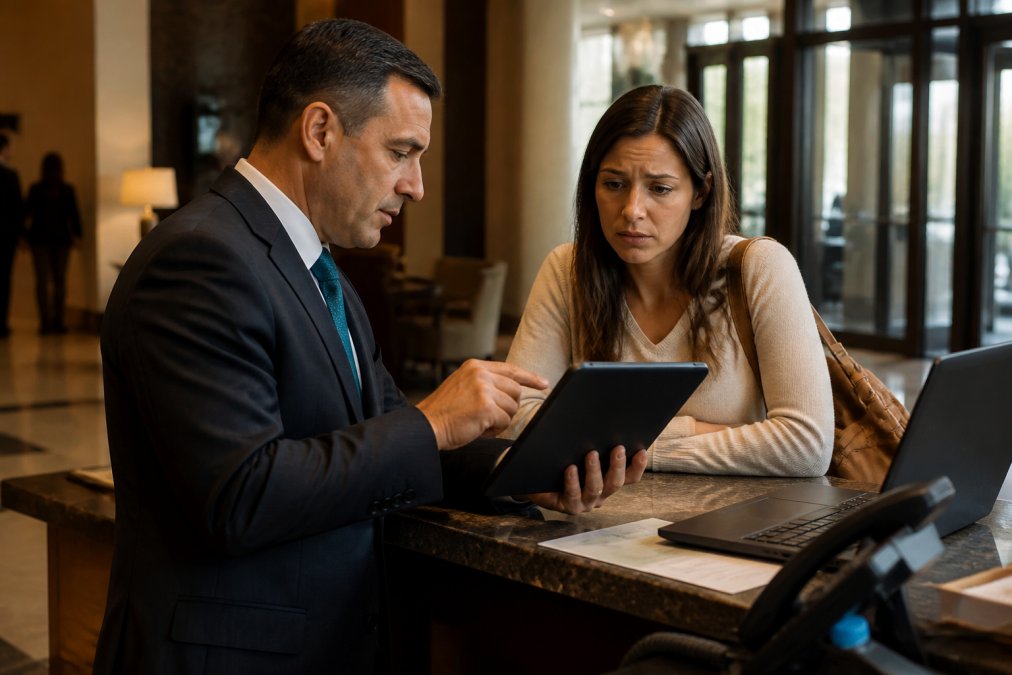
The most underestimated component of data breach recovery costs is customer churn. When guests learn their payment information was exposed, many simply never return. The reputational damage extends beyond the affected individuals: news of a breach spreads quickly through review sites and social media, and prospective guests who were never affected may choose a competitor out of caution.
Post-breach customer retention costs include discount campaigns to win back wary travelers, enhanced loyalty program incentives, and increased marketing spend to rebuild trust. For a boutique hotel that relies on repeat guests and word-of-mouth referrals, the loss of a loyal customer base can be more damaging than the immediate recovery expenses. Crisis management and public relations support are not optional luxuries; they are necessary investments to protect future revenue.
The guest relationship is the hotel's core asset. A breach severs that relationship for a significant portion of your customer base, and rebuilding it takes time and money that most recovery budgets do not anticipate.
Cost Scaling: Boutique Hotels vs. Large Chains
Hotel data breach recovery costs do not scale linearly with property size. A boutique hotel with 50 rooms faces a different cost structure than a 500-room chain, and understanding that difference is critical for purchasing appropriate coverage.
Boutique hotels often suffer proportionally higher costs because they lack in-house cybersecurity expertise. They must hire external firms for everything, from the initial vulnerability assessment to the final forensic report. Their bargaining power with vendors is limited, and they cannot absorb downtime as easily as a chain that can redirect reservations to sister properties.
Large chains benefit from economies of scale. They have dedicated security teams, established incident response procedures, and the ability to spread costs across multiple properties. However, they also face exponentially higher exposure: a breach at a chain's central reservation system affects every property simultaneously, multiplying notification costs and legal exposure.
The table below summarizes how recovery costs differ by property size:
| Cost Factor | Boutique Hotel | Large Chain |
|---|---|---|
| Forensic Investigation | Higher per-record cost | Lower per-record cost |
| Business Interruption | Critical, limited redundancy | Moderate, cross-property support |
| Notification | Smaller volume, higher per-person cost | Massive volume, lower per-person cost |
| Legal Exposure | Single entity liability | Multi-entity, multi-state exposure |
| Guest Churn Impact | Severe, destroys repeat business | Manageable, brand dilution |
How to Reduce Your Recovery Costs With a Breach Response Plan
A well-structured breach response plan is the most effective tool for controlling data breach recovery costs. The first 24 hours after detection are the most expensive and the most consequential. Every hour of confusion adds to the forensic bill, extends the business interruption window, and increases the risk of regulatory penalties.
The essential components of a response plan include:
- A designated incident response team with clear roles and decision-making authority
- Pre-vetted relationships with forensic investigators and legal counsel
- A communication template for notifying guests, staff, and regulators
- Documented procedures for isolating compromised systems and preserving evidence
- A cyber insurance policy with 24-hour access to a dedicated breach response team
A common mistake is waiting until an attack occurs to establish these relationships. Hotels that have pre-negotiated vendor contracts and a clear chain of command reduce their recovery timeline by days, which directly translates to lower costs. Regular security audits and vulnerability assessments also reduce the likelihood of a breach occurring in the first place, and insurers increasingly reward hotels with strong security postures through more favorable premiums.
The threat landscape continues to evolve, and the cost of inaction is rising. Every hotel, regardless of size, needs a response plan that covers the full spectrum of recovery expenses, from forensic investigation to guest retention.
Conclusion
Hotel data breach recovery costs are a multi-faceted financial burden that extends far beyond the initial ransom payment or forensic invoice. From business interruption and notification fees to guest churn and reputational damage, the true cost of a breach can threaten the viability of any property. The key to survival is preparation: a comprehensive breach response plan, a thorough understanding of state notification requirements, and insurance coverage designed specifically for the hospitality industry.
Best Cyber Insurance for Hotels provides specialized coverage tailored to protect properties against the rising threats of cyber attacks, data breaches, and ransomware. With instant cyber insurance coverage, a specialized focus on the hospitality industry, and 24-hour access to a dedicated breach response team, we ensure your business remains resilient when it matters most. Get an instant quote and secure your property against the financial devastation of a data breach.
Frequently Asked Questions
What is the average cost of a data breach per record?
While the exact per-record figure fluctuates, industry studies consistently place the cost of a single lost or stolen record containing personally identifiable information (PII) in the hundreds of dollars. For hotels, the cost per record is often higher because guest files combine payment card data with passport numbers and travel dates. That per-record cost multiplies quickly across your full guest database, which is why a focused incident response plan is essential.
Does cyber insurance cover ransomware payments and recovery expenses?
Most dedicated hospitality cyber insurance policies cover both the ransom payment and the associated recovery expenses, including forensic investigation, legal fees, and system restoration. However, coverage is not automatic: your policy must explicitly include ransomware extortion and social engineering fraud. Review your policy terms to confirm whether it covers business interruption from a system shutdown and whether the insurer requires you to use their approved breach response team.
What are the legal notification requirements following a hospitality data breach?
Notification requirements vary by state, and hotels must comply with the laws of every state where affected guests reside. Most states require notification without unreasonable delay after the breach is confirmed, with some mandating notification within 30 to 60 days. Hotels holding guest payment data must also coordinate with card brands and acquiring banks. Because penalties accrue per day and per record, prompt legal counsel and a pre-planned notification template are critical to controlling costs.
How do forensic investigation costs factor into total breach recovery?
Forensic investigation is typically the first and largest expense after a breach is detected. Investigators must determine how attackers entered your property management system, what data was exfiltrated, and whether the threat is fully contained. These specialists charge by the hour, and their work often spans several weeks. The cost depends on the complexity of your network infrastructure and the number of systems affected, making early detection tools and a pre-vetted incident response retainer essential for budget control.
This article was written using GrandRanker