 listicle
Top 10 Cyber Threats to Hospitality Industry
Table of Contents
- Overview of Cyber Threats in Hospitality
- 1. Ransomware and Data Extortion Attacks
- 2. Phishing and Social Engineering
- 3. Point-of-Sale System Vulnerabilities
- 4. Credential Stuffing and Account Takeover
- 5. Guest Data Privacy Breaches and Third-Party Risk
- Cyber Insurance for Hotels and Incident Response
- Hotel Data Security Best Practices
- Frequently Asked Questions
Last Updated: September 27, 2026
Overview of Cyber Threats in Hospitality
The hospitality industry faces unprecedented cybersecurity challenges. Hotels collect massive amounts of sensitive guest data, credit card numbers, passport information, home addresses, making them prime targets for attackers. Unlike other sectors, hotels operate 24/7 with complex networks spanning front desks, reservation systems, point-of-sale terminals, and guest Wi-Fi. This creates multiple entry points for cybercriminals.
The top 10 cyber threats to hospitality industry represent a critical business risk. A single breach can cost hundreds of thousands of dollars in recovery, regulatory fines, and lost customer trust. According to IBM's 2026 Data Breach Report, the hospitality sector experiences some of the highest average breach costs across all industries due to the volume and sensitivity of guest data at stake.
Understanding these threats is the first step toward building real resilience.
1. Ransomware and Data Extortion Attacks
Ransomware is the single biggest threat to hotels right now. Attackers encrypt your entire system, reservation databases, payment processing, email, and demand payment to restore access. But modern ransomware goes further: criminals steal guest data first, then threaten to sell it publicly unless you pay twice.
Hotels are particularly vulnerable because downtime is catastrophic. You can't check guests in, process payments, or access reservation records. The pressure to pay quickly is immense.
The attack typically starts with phishing emails sent to staff or exploited vulnerabilities in remote access systems. Once inside, attackers move laterally through your network for weeks, mapping out critical systems before deploying the encryption. By the time you notice something's wrong, the damage is already done.
What makes ransomware devastating for hotels: your guests' data is now in criminal hands. You face potential GDPR fines if international guests are affected, state-level data breach notification laws, and civil lawsuits from compromised customers. Best Cyber Insurance for Hotels provides coverage for both ransom payments and recovery costs, plus access to incident response experts.
2. Phishing and Social Engineering
Phishing remains the most common entry point for attackers. Staff receive emails that look legitimate, from your property management system vendor, corporate headquarters, or a guest, asking them to click a link or download an attachment. One click compromises the entire network.
Social engineering is more subtle. Attackers call your front desk pretending to be IT support, asking for passwords. They email managers claiming to be executives, requesting urgent wire transfers. They research your staff on LinkedIn to make their approach more convincing. These tactics work because they exploit human nature, not technical vulnerabilities.
Hotels are particularly susceptible because staff turnover is high, training is inconsistent, and the front-desk environment is chaotic. A tired night-shift employee is more likely to click a suspicious link or share credentials under pressure.
The damage spreads quickly. Once attackers have employee credentials, they access guest databases, payment systems, and administrative functions. They can steal guest data, modify reservations, or plant malware throughout your network. Security awareness training helps, but it's not foolproof, even well-trained staff fall for sophisticated phishing.
3. Point-of-Sale System Vulnerabilities
Your POS system is a direct pipeline to guest payment data. Every credit card swiped, every transaction processed, that data flows through your terminals and back-office systems. Attackers target POS systems specifically because the payoff is immediate: stolen card data sells on the dark web within hours.
Many hotels use outdated POS systems that haven't been patched in years. These systems are running old versions of Windows, using default passwords, and connecting to the internet without proper segmentation. Attackers exploit known vulnerabilities to install malware that captures card data before encryption happens.
The breach often goes undetected for months. Attackers quietly harvest thousands of card numbers while your business operates normally. By the time you discover the compromise, the damage is extensive. Your payment processor flags suspicious activity, customers report fraudulent charges, and regulators launch investigations.
PCI DSS (Payment Card Industry Data Security Standard) compliance is mandatory if you accept credit cards. Yet many hotels struggle to maintain compliance. Regular security assessments, network segmentation, and encryption of cardholder data are non-negotiable. Your POS systems must be isolated from guest Wi-Fi and administrative networks.
4. Credential Stuffing and Account Takeover
Attackers don't always need to breach your systems. They buy stolen credentials from other breaches on the dark web, then use automated tools to test those same usernames and passwords against your systems. Many guests reuse passwords across multiple websites, so credentials stolen from a retail site work on your booking platform.
Once attackers gain access to guest accounts, they modify reservations, add fraudulent bookings, or steal loyalty points. They access personal information stored in profiles. For your business, this means chargebacks, regulatory fines, and damaged customer relationships.
The attack is automated and scalable. Attackers test thousands of credential combinations per minute until they find matches. Your system logs show login attempts from unusual locations, but by then the account is already compromised.
Defending against credential stuffing requires rate limiting on login pages, behavioral analysis to detect unusual account activity, and passwordless authentication options.
5. Guest Data Privacy Breaches and Third-Party Risk
Your hotel doesn't operate in isolation. You use booking platforms, payment processors, property management systems, cleaning services, maintenance vendors, each integration is a potential vulnerability. Attackers often target the weakest link in your supply chain.
Cyber Insurance for Hotels and Incident Response
Why Cyber Insurance Matters for Hospitality
Cyber insurance provides financial protection and expert support when breaches occur. It covers costs that standard liability policies don't: ransom payments, data recovery, forensic investigations, notification expenses, regulatory fines, and business interruption losses.
Building an Incident Response Plan for Hospitality
An incident response plan is your playbook for when (not if) a breach occurs. It specifies who handles what, in what order, to minimize damage and recovery time.
Your plan should include:
- Incident detection and reporting: How staff identify suspicious activity and report it immediately
- Initial containment: Steps to isolate affected systems and prevent spread
- Forensic investigation: Engaging experts to determine what happened and what data was exposed
- Legal and regulatory notification: Compliance with state breach notification laws, GDPR, CCPA
- Customer communication: Transparent notification to affected guests
- Recovery and restoration: Rebuilding systems and returning to normal operations
- Post-incident review: Learning from the breach to prevent future incidents
Hotel Data Security Best Practices
Network Security and Wi-Fi Protection
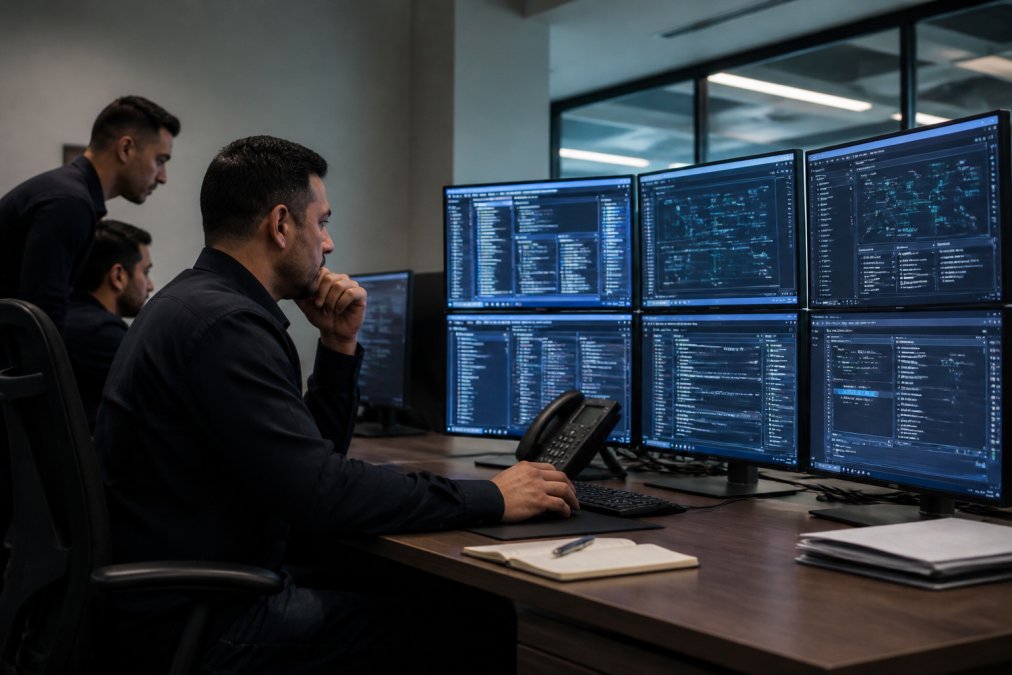
Network monitoring tools detect suspicious activity in real-time.
Multi-Factor Authentication and Access Control
Passwords alone are insufficient. Attackers steal passwords through phishing, brute-force attacks, or credential stuffing. Multi-factor authentication (MFA) adds a second verification step, typically a code from an authenticator app or SMS message, making account takeover much harder.
Security Awareness Training for Staff
Your staff are your first line of defense against phishing, social engineering, and credential theft. Regular security awareness training reduces these risks significantly. Training should cover:
- How to identify phishing emails (suspicious senders, urgent language, unusual requests)
- Password security (unique passwords, password managers, never sharing credentials)
- Social engineering tactics (phone calls requesting information, pretexting)
- Incident reporting procedures (who to contact if something seems suspicious)
- Guest data handling (never sharing guest information, secure disposal of documents)
Frequently Asked Questions
What are the most common cyber threats targeting hotels?
Ransomware, phishing attacks, and point-of-sale system vulnerabilities rank among the most prevalent threats. Ransomware attacks can encrypt critical hotel systems and demand payment for decryption. Phishing exploits staff to gain access to sensitive guest data and payment information. POS vulnerabilities expose credit card data and guest information. These threats are compounded by the hospitality industry's reliance on interconnected systems, guest Wi-Fi networks, and third-party integrations that create multiple entry points for attackers.
How does cyber insurance for hotels protect against data breaches?
Cyber insurance for hotels covers costs associated with data breaches, including breach notification expenses, legal fees, regulatory fines, and credit monitoring services for affected guests. Specialized coverage includes ransomware response support and forensic investigation costs. Many policies provide access to a dedicated breach response team available 24 hours to coordinate immediate incident containment and recovery. Coverage varies by policy, so reviewing specific terms ensures your property's vulnerabilities are addressed.
Why is the hospitality sector targeted by ransomware attacks?
Hotels are high-value targets because they handle significant volumes of guest payment data, operate 24/7 systems with minimal downtime tolerance, and often lack robust cybersecurity infrastructure compared to other industries. Attackers know hotels face pressure to restore operations quickly, making them more likely to pay ransom demands. The distributed nature of hotel operations across multiple properties and systems creates numerous vulnerabilities that criminals exploit.
What should an incident response plan for hospitality include?
An effective incident response plan identifies key personnel, establishes communication protocols for staff and guests, documents system backup procedures, and outlines steps for notifying authorities and affected parties. The plan should specify roles for IT, management, legal, and public relations teams. It must include procedures for isolating infected systems, preserving evidence, and coordinating with law enforcement and cyber insurance providers. Regular testing and updates ensure the plan remains current with evolving threats.
How can hotels protect their point-of-sale systems from malware?
Protect POS systems by implementing network segmentation to isolate payment systems from guest Wi-Fi and administrative networks. Deploy endpoint security solutions that detect and block malware in real-time. Maintain PCI DSS compliance through regular vulnerability scanning, encryption of cardholder data, and strict access controls. Keep all POS software and operating systems patched with the latest security updates. Train staff to recognize phishing attempts that target POS credentials, and monitor systems for unauthorized access attempts.