 ultimate-guide
What Does Hotel Cyber Insurance Cover?
Table of Contents
- Hotel Cyber Insurance: First-Party vs. Third-Party Coverage
- Core Coverage Areas Every Hotel Policy Should Include
- Property Management Systems, POS, and Guest Wi-Fi: Why Hotel Cyber Insurance Must Cover Your Full Tech Stack
- Cyber Insurance Claim Examples from the Hospitality Sector
- What Hotel Cyber Insurance Does NOT Cover
- Hospitality Cyber Security Best Practices That Lower Your Premium
- Cyber Liability Insurance Cost: What Drives Your Hotel's Premium
- Conclusion
Last Updated: August 14, 2026
Hotel Cyber Insurance: First-Party vs. Third-Party Coverage
Hotels are prime targets for cyberattacks due to financial transactions, personal data, and continuous operations. A generic cyber policy written for retail or professional services will leave a hotel dangerously exposed.
Hotel cyber insurance is specialized coverage for financial losses, legal costs, and recovery expenses following a cyberattack or data breach. Understanding first-party versus third-party coverage is essential before purchasing.
First-party coverage protects your hotel directly: lost revenue during system downtime, forensic investigation costs, ransom payments, and guest notification expenses.
Third-party coverage protects you against claims by others, guest lawsuits over stolen payment card data, card brand fines for PCI DSS violations, and regulatory penalties. Most hotels need both to avoid critical gaps.
Core Coverage Areas Every Hotel Policy Should Include
Data Breach Response and Notification Costs
Data breaches trigger mandatory notification obligations. Under state law, hotels must notify affected individuals within 30 to 72 hours. The National Conference of State Legislatures breach notification law tracker documents requirements across all 50 states.
Notification costs include identity theft monitoring, call center setup, credit monitoring enrollment, and legal review. For a mid-sized hotel with hundreds of affected guests, these costs accumulate quickly and often exceed technical remediation expenses.
Ransomware, Cyber Extortion, and Ransom Payments
Ransomware attacks on hotels encrypt reservation systems, payment terminals, and guest management platforms, then demand payment for restoration. Without coverage, hotels face impossible choices between paying ransom out of pocket or absorbing operational damage from extended downtime.
Strong hotel cyber insurance covers ransom payments, negotiation costs, and technical restoration work. The FBI's Internet Crime Complaint Center annual report identifies ransomware as one of the costliest cyber threats to hospitality businesses. Note that ransom coverage carries sublimits and often requires pre-approval before payment.
Business Interruption and Lost Revenue
A ransomware attack locking your property management system stops revenue. Reservations cannot be processed, check-ins stall, and properties may turn guests away entirely.
Business interruption coverage compensates for lost revenue during system outages. Most policies apply a waiting period (typically 8 to 12 hours) and pay for the outage duration up to a policy limit. This coverage applies only to cyber events, not power outages or physical equipment failure.
Forensic Investigation and System Restoration
Forensic investigators analyze logs, identify entry points, determine what data was accessed, and document the timeline. This work satisfies regulatory and legal obligations. System restoration covers rebuilding compromised infrastructure, reinstalling software, and validating systems before returning them to operation.
Legal Defense, Regulatory Fines, and Third-Party Liability
Hotel data breaches create significant legal exposure. Affected guests may file class actions. Card brands impose fines for PCI DSS failures. State attorneys general initiate investigations under consumer protection statutes. The Federal Trade Commission guidance on business data security outlines baseline expectations regulators apply to businesses handling consumer data.
Third-party liability coverage pays legal defense costs, settlements, and regulatory fines where insurable by law. Review this carefully with your broker, as not all regulatory fines are insurable in every state.
Property Management Systems, POS, and Guest Wi-Fi: Why Hotel Cyber Insurance Must Cover Your Full Tech Stack
Generic cyber policies assume simple network topologies. Hotels are fundamentally different.
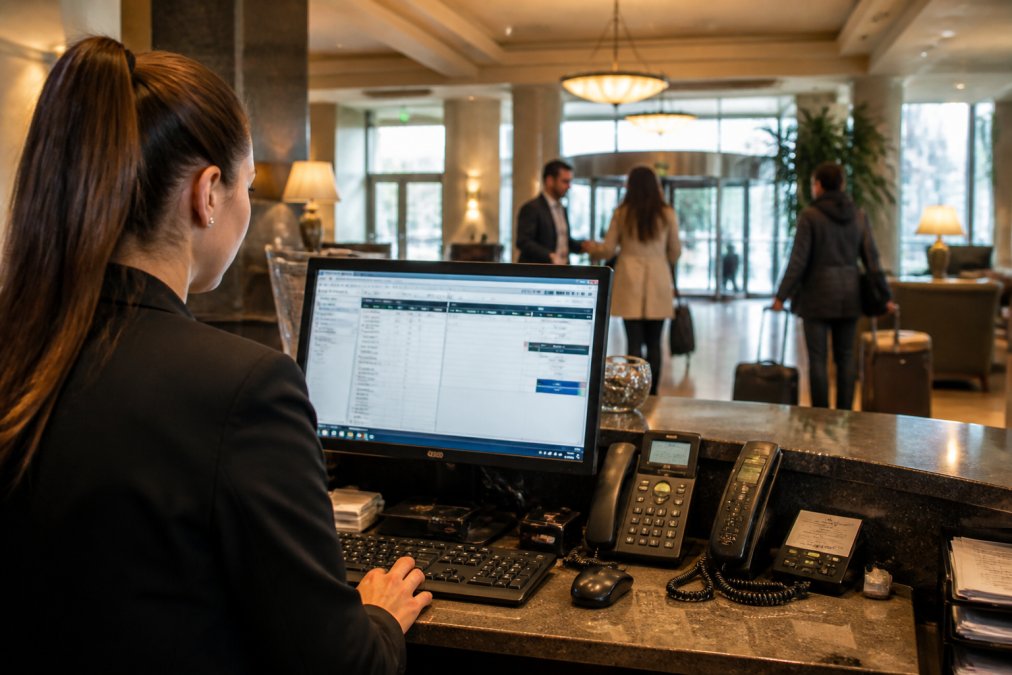
A hotel's technology environment includes a Property Management System storing guest names, payment card data, stay history, and loyalty details. It connects to point-of-sale terminals in restaurants, bars, and spas, feeds into booking engines, and integrates with channel managers and OTA platforms. Guest Wi-Fi, if poorly segmented, can serve as an entry point to internal systems.
Many hotels discover their cyber policy has gaps when a breach originates through guest Wi-Fi and propagates to the PMS, or when a POS compromise exfiltrates card data over weeks, triggering PCI DSS fines that standard policies don't adequately cover.
Ask your insurer directly: does this policy cover breaches originating from or affecting your PMS, POS systems, and guest network? Get the answer in writing.
Cyber Insurance Claim Examples from the Hospitality Sector
A full-service hotel discovers POS malware exfiltrating card data over months. Forensic investigation, guest notification, and PCI DSS fines follow. A class action claim emerges. A policy with strong third-party liability coverage responds to the bulk of the loss.
A boutique property receives a ransomware demand encrypting the PMS and reservation database. With a 72-hour outage during peak season, revenue loss is material. Cyber extortion coverage pays for ransom negotiation and payment. Business interruption coverage compensates for lost room revenue.
A hotel chain employee clicks a phishing link. The attacker accesses the HR system and exfiltrates employee Social Security numbers and payroll data. Notification obligations to employees and state attorney general investigation follow. Social engineering coverage and regulatory defense costs respond.
What Hotel Cyber Insurance Does NOT Cover
Common Exclusions That Lead to Claim Denials
| Exclusion Type | Why Claims Get Denied | What to Do Instead |
|---|---|---|
| Pre-existing vulnerabilities | Attack exploited a known, unpatched flaw | Maintain patch management; document it |
| War and nation-state attacks | Attribution to a state actor triggers exclusion | Ask about "hostile acts" carve-outs |
| Bodily injury / property damage | Physical damage from a cyber event | Coordinate with property policy |
| Fraudulent wire transfer | Social engineering without specific endorsement | Add social engineering coverage |
| Failure to maintain security | No MFA, outdated systems at time of loss | Meet minimum security requirements |
| Criminal acts by insured | Intentional acts by hotel staff | Standard exclusion; cannot be waived |
The failure-to-maintain-security exclusion catches hotels most often. Insurers increasingly require minimum security standards as a condition of coverage. If your hotel lacked multi-factor authentication on email or administrative systems at the time of breach, your insurer may deny the claim.
Cyber Insurance vs. Traditional Property Insurance
Traditional property insurance covers physical assets. It does not cover digital assets, data loss, or revenue impact from system outages caused by cyberattacks.
Some property policies include limited "electronic data" endorsements, typically covering software reinstallation but excluding breach notification costs, regulatory fines, and business interruption losses that represent the majority of cyber incident costs.
Cyber insurance and property insurance cover different losses. Hotels need both.
Hospitality Cyber Security Best Practices That Lower Your Premium
Insurers price hotel cyber insurance based on risk. Stronger security lowers your premium and is what insurers verify before binding coverage.
- Multi-factor authentication (MFA): Required on email, remote access, and administrative accounts. This eliminates a large proportion of credential-based attacks.
- Network segmentation: Guest Wi-Fi isolated from operational networks. POS systems on separate segments from PMS. Segmentation limits breach blast radius.
- Patch management: Documented, regular patching of operating systems, PMS software, and POS terminals. Unpatched systems are the most common entry point.
- Employee security training: Phishing simulations and annual awareness training. Staff are the most targeted vector.
- Incident response plan: A written, tested plan defining roles in the first 24 hours. Insurers increasingly require this at application.
- Endpoint detection and response (EDR): Active monitoring tools detecting and containing threats before propagation.
- Backup and recovery testing: Offline or immutable backups of critical systems, tested regularly. This is your primary ransomware defense.

According to CISA's hospitality sector cybersecurity guidance, network segmentation and MFA are the highest-impact controls for hospitality businesses. Implementing them before applying for coverage can meaningfully reduce your premium.
Cyber Liability Insurance Cost: What Drives Your Hotel's Premium
Cyber liability insurance cost for hotels varies based on factors underwriters assess during application. Best Cyber Insurance for Hotels offers instant quotes so you can see coverage options without waiting weeks.
Primary premium factors include:
- Annual revenue: Higher revenue increases business interruption loss potential.
- Number of records stored: Large volumes of guest payment data and personal information increase breach notification exposure.
- Security controls in place: MFA, EDR, segmentation, and documented incident response plans reduce risk and premium.
- Prior claims history: Previous cyber incidents increase premiums. Full disclosure is required.
- Coverage limits and sublimits: Higher limits increase premiums.
- Property type and scale: A 50-room boutique hotel carries different risk than a 500-room conference hotel.
The right question isn't whether hotel cyber insurance costs more than bundling cyber coverage with existing policies. The right question is whether bundled coverage actually covers your specific exposures. Many bundled cyber endorsements carry low limits and broad exclusions that leave hospitality properties underinsured.
Get a quote reflecting your hotel's actual technology environment, security posture, and revenue exposure for accurate comparison.
Hotels face an increasingly complex cyber threat landscape, and uninsured incidents can threaten business viability. Best Cyber Insurance for Hotels provides specialized coverage built for hospitality, with 24-hour access to a dedicated breach response team and instant quotes. Get an instant quote and know exactly what your hotel is protected against before the next threat arrives.
Frequently Asked Questions
Does hotel cyber insurance cover ransomware payments?
Most hotel cyber insurance policies include cyber extortion coverage, which can pay the ransom itself as well as the costs of negotiating with attackers and restoring encrypted systems. Coverage limits and conditions vary by policy, so review your terms carefully. Some policies require you to notify the insurer before making any payment. A dedicated breach response team available around the clock can guide you through that process the moment an attack hits.
What does hotel cyber insurance NOT cover?
Common exclusions include losses from pre-existing breaches discovered after the policy start date, intentional acts by the insured, physical damage to hardware (covered under property insurance instead), and attacks on systems the insurer was not told about during underwriting. Social engineering fraud and acts of war are also frequently excluded or sub-limited. Reading your policy exclusions before a claim arises is the only way to avoid an unpleasant surprise when you need coverage most.
How does hotel cyber insurance protect against guest data breaches?
Hotel cyber insurance covers the direct costs of a guest data breach: forensic investigation to find the source, mandatory notification letters to affected guests under state breach notification laws, credit monitoring services, and public relations expenses to manage reputational harm. It also covers third-party liability claims if guests sue over identity theft or financial loss tied to the breach. PCI DSS fines and penalties from card brands can be included in specialized hospitality policies.
Is cyber insurance separate from general liability and property insurance for hotels?
Yes. Standard general liability and commercial property policies do not cover digital assets, data recovery, cyber extortion payments, or regulatory fines under laws like CCPA. Cyber liability insurance fills that gap with first-party coverage for your own financial losses and third-party coverage for claims from guests or business partners. Bundling a cyber endorsement onto an existing policy often provides lower limits and narrower terms than a standalone hotel cyber insurance policy.
This article was written using GrandRanker