 ultimate-guide
What Happens If a Hotel Has a Cyber Attack: 2026 Guide
Table of Contents
- The First 72 Hours After a Hotel Cyber Attack
- Financial Fallout: Ransom Demands, Downtime, and Recovery Costs
- Does Cyber Insurance Cover Ransomware and Guest Data Breaches?
- Hotel Data Breach Notification Requirements: Who You Must Tell and When
- Building an Incident Response Plan for Hotels Before the Attack Hits
- Smart Rooms, Weak Links: IoT Vulnerabilities in Hospitality
- Training Staff to Spot Phishing and Social Engineering
- Conclusion
- Frequently Asked Questions
Last Updated: September 23, 2026
The First 72 Hours After a Hotel Cyber Attack
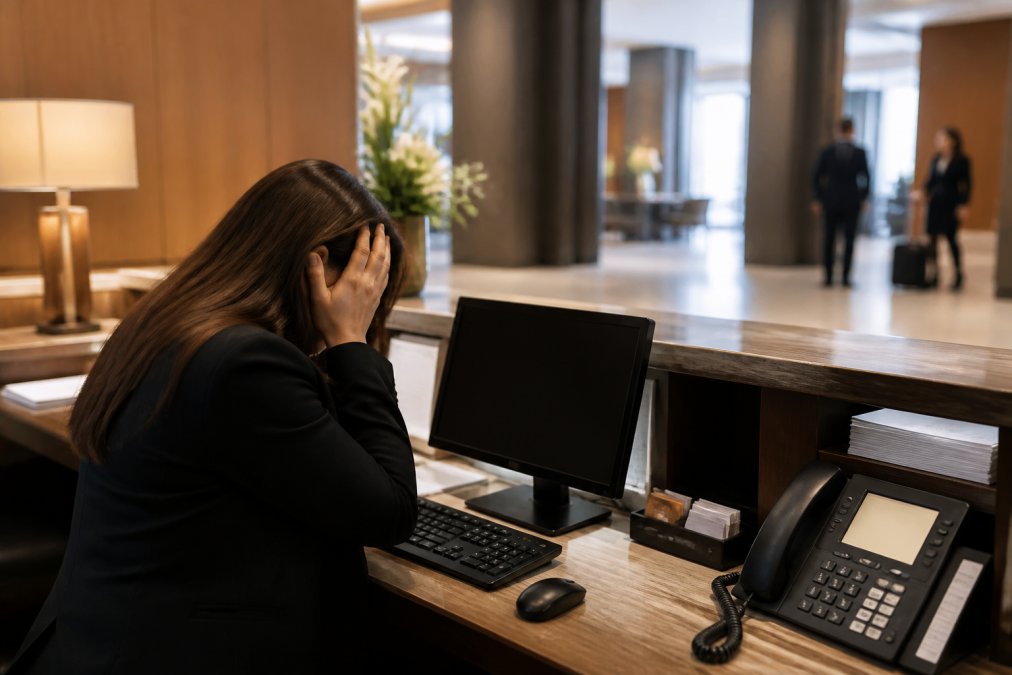
When considering what happens if a hotel has a cyber attack, the property typically loses access to its property management system, point-of-sale (POS) systems, and booking channels within minutes, while guest personal data may already be exfiltrated. At Best Cyber Insurance for Hotels, we field calls from general managers in exactly this position, and the first 72 hours decide whether the incident stays contained or becomes a full-scale operational crisis.
Who Does What: Your Incident Response Team in Action
Incident response is the coordinated set of actions a hotel takes to contain, investigate, and recover from a cyber attack while preserving evidence and meeting legal obligations.
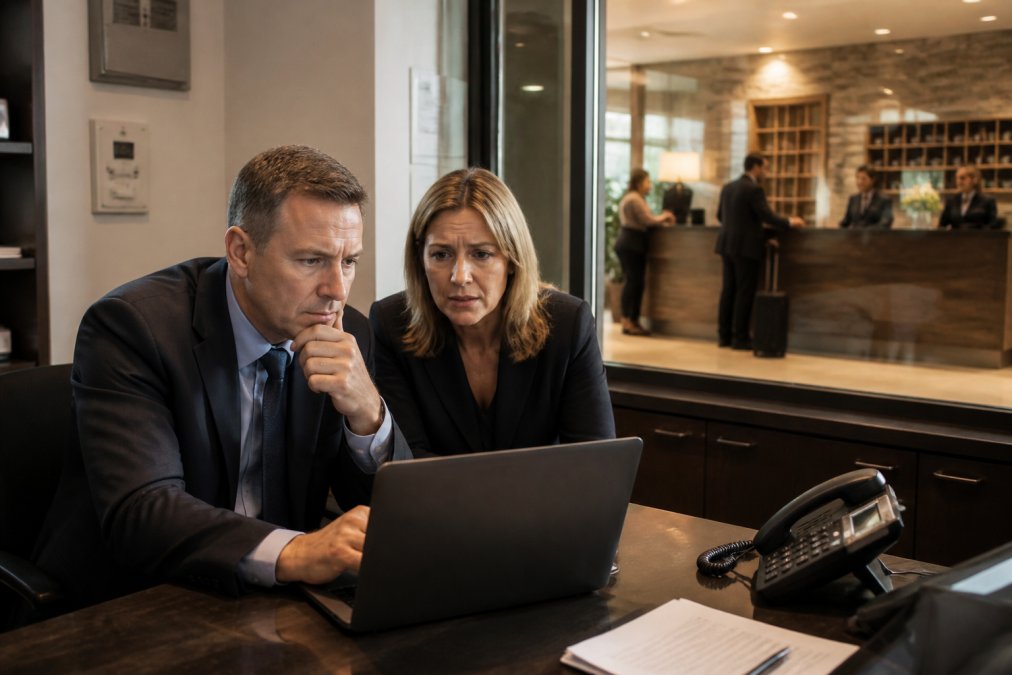
A dedicated breach response team handles four parallel workstreams:
- IT and forensics: isolate affected systems, preserve logs, and begin digital forensics
- Legal counsel: assess notification duties and prepare for potential legal litigation
- Communications: draft guest and media statements
- Operations: switch to manual check-in and cash-handling procedures
Financial Fallout: Ransom Demands, Downtime, and Recovery Costs
The financial impact of a data breach in hospitality rarely comes from a single source. Ransomware operators demand payment to restore encrypted files, but the larger cost is usually business interruption: rooms cannot be booked, POS systems stay offline, and front-desk staff work manually for days. The table below is a starting point, but the mechanics behind each line item are what actually determine your final number.
| Cost Category | What It Covers | Typical Trigger |
|---|---|---|
| Ransom demand | Payment to restore encrypted systems | Ransomware encryption |
| Business interruption | Lost room revenue during downtime | System downtime |
| Digital forensics | Investigation and evidence recovery | Data exfiltration |
| Legal and regulatory | Counsel, fines, consumer redress | Compliance standards |
| Guest notification | Credit monitoring, mailings | PII exposure |
| Card network assessments | Fines and reissuance fees passed down by card brands | Confirmed PAN exposure |
How downtime actually becomes lost revenue
A hotel's revenue loss during an attack is not simply "rooms not sold." It is the sum of several compounding effects:
- Walked reservations. When the PMS is down, front desk staff cannot confirm existing bookings, so arriving guests are sent to competitors. Those guests are often gone permanently, not just for one night.
- Channel paralysis. OTAs and the brand's central reservation system keep selling rooms you cannot service. Every unfulfilled booking becomes a refund, a chargeback, and a negative review.
- Manual check-in drag. Manual check-in typically takes three to five times longer per guest. At a 200-room property with a normal afternoon arrival wave, that backlog alone can push check-in times past midnight.
- POS and F&B loss. Outlets that cannot process cards either close or move to cash-only, which cuts average check size and eliminates room-charge posting.
- Event and group attrition. Meeting planners with force-majeure clauses will invoke them if the property cannot deliver contracted services.
The ransom decision is not just a payment
Paying a ransom involves three separate gates that many hoteliers do not learn about until they are in the middle of an incident:
- Sanctions screening. Paying a threat actor on a U.S. Treasury Department Office of Foreign Assets Control (OFAC) sanctions list is itself a legal exposure, regardless of the reason for payment. Counsel should screen the wallet and any identified actor before any transfer.
- Insurer consent. Most cyber policies require the carrier's prior written consent before any ransom payment. Paying without consent can void reimbursement even if the ransom would otherwise have been covered.
- Decryption reality. Ransomware decryption tools are frequently incomplete or corrupted. Many organizations that pay still restore from backups because the decryption key does not fully work.
Recovery timelines you can actually plan around
Recovery timelines vary widely, but hoteliers can plan against rough bands:
- Contained ransomware with tested, offline backups: core systems restored in days, full forensic closure in two to four weeks.
- Ransomware with compromised backups: one to three weeks of degraded operations, often with manual check-in for the first several days.
- Full data breach involving guest PII: notification, credit monitoring, and regulatory response can extend for months, with legal and forensics work continuing long after systems are back online.
Does Cyber Insurance Cover Ransomware and Guest Data Breaches?
A cyber liability policy can cover ransomware payments, business interruption, forensics, and breach notification costs, but coverage depends entirely on the policy language you signed. This is the single most important question hotel owners ask us, and the answer is never a simple yes.
Most specialized hospitality policies include:
- Ransom and extortion coverage, subject to sublimits
- Business interruption for system downtime
- Digital forensics and incident response costs
- Regulatory fines where insurable
- Guest notification and credit monitoring expenses
Hotel Data Breach Notification Requirements: Who You Must Tell and When
Hotel data breach notification requirements depend on the states where you operate and the data involved. Most state breach-notification statutes require notice to affected individuals "without unreasonable delay" after discovery, and many require parallel notice to the state attorney general when the breach crosses a numeric threshold of affected residents. Because rules differ by jurisdiction, confirm your specific obligations with legal counsel and your state's official guidance rather than relying on a generic timeline.
The four clocks that start ticking at once
Hoteliers often assume there is one notification deadline. In practice, four separate clocks start when you suspect a breach:
- State individual-notice clock. Triggered at discovery in most states. "Discovery" generally means the moment you have reason to believe a breach occurred, not the moment forensics confirms it.
- State attorney general clock. Many states require AG notice either simultaneously with individual notice or within a set window (commonly 30 days) when the breach affects residents above a statutory threshold. A handful of states require AG notice regardless of the number of residents affected.
- Payment card network clock. If card numbers were exposed, the card brands and your acquiring bank operate on their own contractual timelines, often measured in days, not weeks. Miss them and you can lose the ability to recover card-reissuance assessments from your processor.
- Insurer notice clock. Cyber liability policies typically require notice of a claim or potential claim "as soon as practicable." Late notice is one of the most common reasons carriers deny coverage.
Who may need to be notified
- Affected guests whose PII was exposed
- State attorneys general, where required by statute or threshold
- Payment card networks and your acquiring bank
- Your cyber liability insurer, promptly
- Consumer reporting agencies, in some states, when the breach exceeds a statutory count
- Federal regulators, if the property is part of a publicly traded chain or operates under specific federal frameworks
What "PII" actually triggers notification
Not every exposed data element triggers a notification duty. Common trigger categories include:
- Name plus Social Security number, triggers in essentially every state
- Name plus driver's license or state ID number, triggers in most states
- Name plus financial account or card number, triggers in most states, sometimes only if the number was unencrypted
- Name plus medical or health insurance information, triggers under state health-privacy statutes and, for some entities, under HIPAA
- Username or email plus password, triggers in a growing number of states
A practical notification sequence
A workable sequence most hospitality counsel recommend:
- Hour 0-24: Document the discovery timestamp. Notify your cyber insurer and breach counsel. Preserve logs.
- Day 1-3: Engage forensics. Begin scoping which data elements and how many individuals are involved.
- Day 3-14: Draft individual and AG notices with counsel. Confirm state-specific content requirements, many states mandate specific language, headings, and contact information.
- Before the statutory deadline: Send individual notices by the method your state requires (written notice is the default; email or substitute notice is allowed only under specific conditions).
- Ongoing: Update notices if the scope of the breach changes, and retain documentation of every notification for regulatory review.
Document your discovery timestamp the moment you suspect a breach. Notification clocks often start at discovery, not at confirmation, and a clean timeline protects you during regulatory review.
Building an Incident Response Plan for Hotels Before the Attack Hits
An incident response plan for hotels is a written playbook that names who does what, who to call, and how to communicate when systems fail. Hotels that build one before an attack recover faster and spend less on legal and forensics work.
Your plan should include:
- Named incident response team with after-hours contacts
- 24-hour breach response team phone number
- System isolation and backup restoration procedures
- Guest communication templates, pre-approved by counsel
- Insurer notification checklist
- Manual check-in and POS fallback procedures
- Post-incident review schedule
Post-attack guest communication template:
Smart Rooms, Weak Links: IoT Vulnerabilities in Hospitality
Smart room technology is the fastest-growing network vulnerability in hospitality, and most top-ranking guides ignore it entirely. Smart locks, thermostats, voice assistants, and in-room tablets often ship with default credentials, unpatched firmware, and flat network access to core systems.
Training Staff to Spot Phishing and Social Engineering
Phishing remains the leading cause of credential theft in hotels, and front-desk staff are prime targets because they routinely handle reservations, payment changes, and guest requests under time pressure. Social engineering attacks often arrive as a plausible email from a "guest" or "corporate office."
Conclusion
What happens if a hotel has a cyber attack is not a question of if but when, and the difference between a contained incident and a catastrophe comes down to preparation. Best Cyber Insurance for Hotels provides instant coverage, a specialized focus on the hospitality industry, and 24-hour access to a dedicated breach response team that answers at 2 AM on a Sunday.
Frequently Asked Questions
What is the first thing to do during a cyber attack on a hotel?
Isolate affected systems from the network immediately, but do not power them off, because that can destroy forensic evidence. Notify your cyber insurance carrier or breach response team, then contact legal counsel. Your incident response plan for hotels should list these steps in order, with after-hours phone numbers for every contact. Preserving evidence matters if you later need to file a claim or identify what data was taken.
Does cyber insurance cover ransomware payments and recovery costs?
Most specialized cyber liability policies cover ransomware response, including negotiation services, ransom payment (where legally permitted), system restoration, and business interruption losses. Coverage limits and sub-limits vary, so review your policy language carefully. A dedicated breach response team can coordinate payment, decryption, and recovery so your staff can focus on guests rather than negotiating with malicious actors.
What are the legal notification requirements after a hotel data breach?
Every state has its own breach notification statute with different deadlines and thresholds. Some require notice within 30 days, others within 60, and a few have no fixed deadline but require notice without unreasonable delay. If guests from other countries were affected, other regimes may apply. Because rules differ by state and by data type, work with counsel and your insurer to determine exactly who must be notified and when.
How long does it take a hotel to recover from a cyber attack?
Recovery timelines vary widely. A contained ransomware incident with good backups might be resolved in days, while a full data exfiltration involving point-of-sale systems or property management software can take weeks or months to investigate, notify guests, and restore trust. Hotels with a tested incident response plan and a dedicated breach response team typically recover faster because forensics, legal, and communications work starts immediately rather than after days of confusion.