 ultimate-guide
Why Hotel Data Breaches Are Increasing in 2026
Table of Contents
- Why Hotels Are Prime Targets for Cybercriminals
- Types of Sensitive Guest Data at Risk
- Common Attack Vectors: Phishing, Malware, and Credential Stuffing
- The Role of Third-Party Software and Integrations in Hotel Breaches
- Hotel Cybersecurity Best Practices 2026
- Cyber Insurance for Hotels: Coverage and Response
- Hospitality Industry Data Breach Statistics and Financial Impact
- Regulatory Compliance and Legal Consequences After a Breach
- Frequently Asked Questions
Last Updated: September 30, 2026
Why Hotels Are Prime Targets for Cybercriminals
Hotels are increasingly attractive targets for cybercriminals because they collect and store massive amounts of sensitive guest data across interconnected systems. Payment information, passport details, home addresses, and personal preferences flow through property management systems, booking platforms, and payment processors, creating a sprawling attack surface that most hospitality properties aren't equipped to defend. (Source: a 2026 report by the Cybersecurity and Infrastructure Security Agency (CISA))
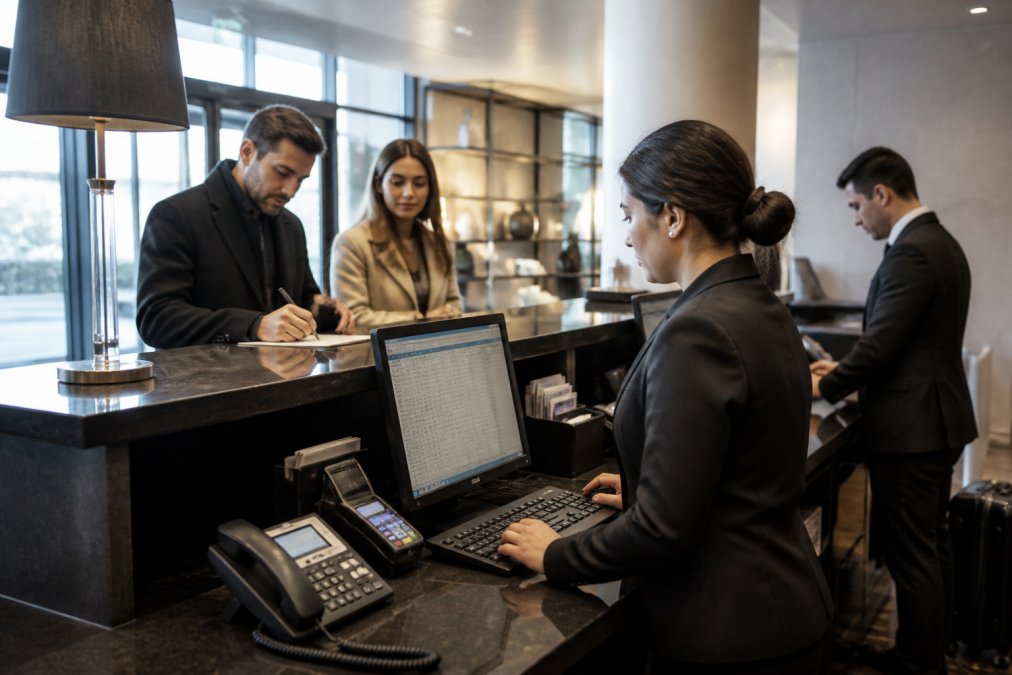
The hospitality industry's vulnerability stems from a specific structural problem: hotels operate on thin margins and historically haven't prioritized cybersecurity infrastructure the way financial institutions or healthcare systems have. Legacy property management systems remain in use for years, often running outdated software with known vulnerabilities. Third-party integrations multiply the risk surface, booking engines, loyalty programs, housekeeping apps, and payment gateways all connect to central databases, but not all of them maintain the same security standards.
Attackers know this. A single compromised integration or unpatched system can grant access to databases containing thousands of guest records. The financial payoff justifies the effort: ransom demands targeting hospitality chains regularly reach six figures, and the data itself sells on dark markets. Hotels are now among the most frequently targeted sectors for data breaches.
Types of Sensitive Guest Data at Risk
Every guest interaction generates data that criminals want. Payment card information is the most obvious target, but the full scope of data at risk extends far beyond credit card numbers. Names, email addresses, phone numbers, passport details, and travel dates create a complete identity profile that enables fraud, phishing campaigns, and social engineering attacks against guests long after they've checked out.
Loyalty program data amplifies the problem. Guest preferences, room history, and behavioral patterns help attackers craft convincing phishing emails that reference past stays or upcoming reservations. A message saying "We noticed unusual activity on your reservation for next month" carries credibility because the attacker has real reservation data. Home addresses enable mail-based fraud. Passport information facilitates identity theft across international borders.
Payment card data remains the crown jewel for attackers because it converts directly to cash. A single breach exposing 10,000 guest cards can generate hundreds of thousands of dollars in fraudulent transactions before detection. The Payment Card Industry Data Security Standard (PCI DSS) requires encryption and tokenization of card data, but many hotels struggle with compliance, storing unencrypted cards in accessible locations or failing to properly segment payment systems from general networks.
Common Attack Vectors: Phishing, Malware, and Credential Stuffing
Phishing remains the entry point for most hotel data breaches. Staff receive emails appearing to come from corporate headquarters, payment processors, or system vendors, requesting password resets or access to administrative portals. A single compromised employee credential opens the door to lateral movement through hotel networks, where attackers navigate toward databases containing guest information.
Malware attacks often target the property management system directly. Ransomware variants designed specifically for hospitality environments encrypt critical files, forcing hotels to choose between paying ransoms or losing access to booking systems, guest records, and operational data. The disruption during an active ransomware attack, guests unable to check in, staff locked out of systems, creates pressure to pay quickly, which is exactly what attackers count on.
Credential stuffing exploits reused passwords across multiple platforms. An attacker obtains a list of email addresses and passwords from a previous breach (from another industry entirely), then systematically tries those credentials against hotel booking systems and administrative portals. Many guests use the same password everywhere; many hotel staff do the same. A single match grants access to guest accounts or backend systems.
Third-party vulnerabilities introduce another vector. A breach in a booking platform, loyalty system, or payment processor can expose hotel data even when the hotel's own systems are secure. The attacker compromises the third-party vendor, then pivots to access the hotel's data through integration APIs or shared databases.
The Role of Third-Party Software and Integrations in Hotel Breaches
Modern hotels operate through a constellation of third-party systems: Marriott properties use Bonvoy integration, independent hotels use Booking.com or Expedia APIs, and nearly all properties use payment processors, channel managers, and revenue management platforms. Each integration is a potential vulnerability if the vendor doesn't maintain security standards matching the hotel's own requirements.
A common mistake is assuming that major third-party platforms handle security comprehensively. They don't. Payment processors are responsible for card data; booking platforms are responsible for reservation data; but the hotel remains liable for how that data is protected across the entire ecosystem. A breach in a lesser-known channel manager or housekeeping app can expose guest records just as easily as a breach in the primary PMS.
Integration security requires explicit attention. APIs connecting systems often transmit data unencrypted or with weak authentication. Database credentials shared between systems create single points of failure. A compromised integration can grant attackers access to real-time reservation data, guest contact information, and payment processing logs. Hotels that don't regularly audit third-party access permissions or request security documentation from vendors are operating blind to a major risk category.
Hotel Cybersecurity Best Practices 2026
Effective hotel cybersecurity starts with segmentation. Guest-facing networks should be isolated from internal systems, which should be isolated from payment processing systems. This containment strategy prevents a breach in one area from cascading through the entire operation. If a guest WiFi network is compromised, attackers shouldn't have a direct path to the PMS or payment systems. Modern automated defenses must also extend this principle of compartmentalization to the underlying machine learning models, as securing AI systems against malicious manipulation is now as critical as protecting the physical network architecture.
Multi-factor authentication (MFA) across all administrative access is non-negotiable. Staff accessing the property management system, guest databases, or payment platforms should authenticate with something they know (password) and something they have (phone, security key, or authenticator app). This single practice blocks the majority of credential-based attacks, including phishing and credential stuffing.
Regular security audits identify vulnerabilities before attackers do. A qualified security firm should conduct annual penetration testing, vulnerability assessments, and configuration reviews. These aren't optional, they're the only reliable way to discover unpatched systems, weak passwords, overpermissioned accounts, or misconfigured integrations.
Staff training transforms employees from a liability into a detection layer. Hotel workers should understand how phishing emails work, why they shouldn't share passwords, and what to do if they notice suspicious activity. A single employee who recognizes a phishing attempt and reports it can prevent a breach that would cost hundreds of thousands of dollars.
Encryption protects data in transit and at rest. Payment card data, guest information, and staff credentials should be encrypted when stored and when transmitted between systems. This doesn't prevent attackers from gaining access, but it makes the data worthless if they do.
Cyber Insurance for Hotels: Coverage and Response
Cyber insurance provides two critical functions: financial protection when breaches occur, and access to specialized response resources that most hotels don't have in-house. A data breach triggers immediate costs, forensic investigation, notification to affected guests, credit monitoring services, regulatory fines, and potential lawsuits. These expenses can exceed the cost of the insurance premium by orders of magnitude.
Best Cyber Insurance for Hotels covers the full scope of breach response, including forensic investigation, legal defense, regulatory fines, and guest notification costs.
| Coverage Type | What It Protects | Why It Matters |
|---|---|---|
| Breach Response | Forensic investigation, notification, credit monitoring | |
| Ransomware | Ransom payments and recovery costs | Operational shutdown creates pressure to pay quickly |
| Regulatory Fines | FTC, state attorney general, and CCPA/GDPR fines | |
| Legal Defense | Defense costs for lawsuits from affected guests | Litigation costs exceed settlement amounts without defense coverage |
| Business Interruption | Lost revenue during system downtime |
Hospitality Industry Data Breach Statistics and Financial Impact
The hospitality sector experiences data breaches at rates comparable to healthcare and financial services. Guest data is valuable because it's complete, names, contact information, payment details, and travel patterns enable comprehensive identity theft. A single breach affecting a mid-sized hotel chain can expose hundreds of thousands of guest records.
Regulatory Compliance and Legal Consequences After a Breach
State data breach notification laws require hotels to notify affected individuals within specific timeframes, typically 30-60 days. Notification must disclose what data was compromised, when the breach occurred, what steps the hotel is taking to secure systems, and what steps individuals should take to protect themselves. Failure to notify triggers additional penalties.
Frequently Asked Questions
What makes hotel data breaches so profitable for cybercriminals?
Hotels hold high-value personally identifiable information and payment card data from multiple guests simultaneously. Attackers can extract payment information, passport details, and contact information from thousands of records in a single breach. This data sells for premium prices on dark web marketplaces. Additionally, hotels often lack the cybersecurity infrastructure of larger enterprises, making them easier targets. The combination of valuable data and relatively weaker defenses creates an attractive opportunity for threat actors.
How does cyber insurance for hotels actually help during a data breach?
Cyber insurance for hotels covers incident response costs, forensic investigations, legal fees, regulatory fines, and notification expenses. Specialized hospitality coverage includes access to breach response teams available 24/7 to guide you through the immediate aftermath. Policies typically cover costs related to guest notification, credit monitoring services, and regulatory compliance obligations. Some policies also cover ransom payments and recovery costs, though this varies by coverage limits. The key is having dedicated support when a breach occurs, reducing both financial exposure and response time.
Why are property management systems (PMS) such a common target?
Property management systems are centralized repositories for guest data, payment information, and reservation details. A single compromised PMS can expose thousands of guest records. These systems often run legacy software with known vulnerabilities that hotels delay patching due to operational disruption concerns. PMS platforms frequently integrate with multiple third-party applications, creating additional attack vectors. Cybercriminals know that hotels depend heavily on PMS functionality, making ransomware attacks particularly effective since downtime directly impacts revenue and guest experience.
What are the main regulatory compliance obligations after a hotel data breach?
Hotels must comply with state data breach notification laws, which require notification to affected individuals without unreasonable delay. The Payment Card Industry Data Security Standard (PCI DSS) applies if you store payment card data, with breach investigation and remediation requirements. If you serve international guests, GDPR compliance may apply, requiring notification to European regulators. Most states also require notification to state attorneys general if breaches affect residents. Failure to comply results in significant fines and legal liability, making compliance a critical post-breach priority.