 How-to
Hotel Ransomware Breach Notification Requirements Explained
Last Updated: November 6, 2026
Quick Summary
A hotel ransomware breach becomes a legal notification event when attackers acquire guest personal information and the hotel has a reasonable belief that harm occurred. Deadlines are set by state law, typically 30 to 90 days from discovery, so fix the discovery date carefully and confirm requirements for each state where affected guests live.
- 36 states (71%) require breach reports to the attorney general or another state agency, but only 21 publish that data.
- Some states measure deadlines from when the hotel first had reason to suspect unauthorized access, not from the ransom note.
- Image affected drives before restoring from backup so you preserve the log evidence that supports your discovery date.
- A vendor contract that assigns notice to the vendor may still leave the hotel holding its own regulatory deadline.
- Build a deadline tracker listing the trigger, deadline, regulator, and notice content for each state where guests reside.
Table of Contents
- When a Hotel Ransomware Breach Triggers Notification Duties
- Who a Hotel Must Notify: Guests, Regulators, and Law Enforcement
- Notification Deadlines and the FTC Data Breach Reporting Rule
- Building a Ransomware Incident Response Plan for Hotels
- Your Data Breach Response Checklist for the First 72 Hours
- What to Put in a Data Breach Notification Letter Template
- Getting Coverage in Place Before the Next Attack
- Frequently Asked Questions
When a Hotel Ransomware Breach Triggers Notification Duties
A hotel ransomware breach becomes a legal notification event when attackers acquire guest personal information and the hotel has a reasonable belief that harm occurred.
The stakes are not abstract. According to Privacy Rights Clearinghouse's 2026 50-state survey, 36 states (71%) require entities to report breaches to the attorney general or another state agency. Only 21 states publish that data, so a quiet filing stays quiet.
The Reasonable Belief Standard and the Discovery Date
"Reasonable belief" is the pivot point. A breach is not reportable the moment malware appears; it is reportable when you have reason to believe personal information was accessed or acquired.
Watch out: treating discovery as the day the ransom note arrived can start your clock weeks before you think it did, and some states measure deadlines from that earlier date.
What Guest Data Hotels Actually Hold
Hotels hold more than room charges. The typical property stores:
- Names, home addresses, phone numbers, and email addresses
- Payment card data through the property management system
- Passport and ID scans from check-in
Payment card data and ID scans carry the highest risk of identity theft, which is why they drive most notification decisions.
Who a Hotel Must Notify: Guests, Regulators, and Law Enforcement
Notification duties split into three tracks: affected individuals, state regulators, and law enforcement. State laws generally require consumer notice to affected individuals, and some also require a parallel filing with the attorney general. Confirm the requirements for each state where your guests live with the official state source. Law enforcement notification is usually permitted and often expected, but the specific duty varies by state.
Franchise and management structure complicates this. The property, the management company, and the brand may each carry separate duties under their agreements and under state law. Third-party service providers, from the PMS vendor to the reservations platform, should be under contract to notify you quickly, because their breach becomes your deadline.
Our guide to hotel data privacy regulations maps which privacy rules trigger these duties and to whom.
Notification Deadlines and the FTC Data Breach Reporting Rule
Deadlines are set by state law, and they are not uniform. Some state deadlines are fixed and others use "without unreasonable delay" or similar language instead of a set number. Certain federal and state frameworks set shorter windows for covered entities in specific sectors, so confirm with counsel and the official sources which regime applies to your property.
Federal rules such as the FTC's Health Breach Notification Rule apply to specific data types, so check with counsel whether any federal rule reaches your guest records.
| Regime | Typical Window | Applies To |
|---|---|---|
| State breach laws | 30-90 days from discovery | Most hotels, per state |
| "Without unreasonable delay" states | As soon as practicable | Varies by state |
| 72-hour frameworks (CIRCIA, NYDFS) | 72 hours | Covered sectors only |
| FTC Health Breach Rule | 60 days | Health data holders |
How the Discovery Date Moves Every Clock
The single most consequential decision in a hotel ransomware event is fixing the discovery date. Because earlier detection can shape when a hotel has reason to know personal information was exposed, efforts to prevent ransomware should include controls that limit unauthorized access and make suspicious activity easier to identify.
Watch out: if your team reboots a locked server or restores from backup before imaging the drive, you can lose the log evidence that would have established a later, defensible discovery date, and you may also destroy the evidence a regulator would use to test your timeline.
State-Specific Filing Mechanics Hotels Should Know
Beyond the general deadline range, state laws may impose additional mechanics that a generic summary can miss:
- Attorney general filing. Some states require a parallel notice to the attorney general, sometimes on a different timeline than the consumer notice. Confirm the requirements for each state where your guests live.
- Consumer reporting agency notice. When a breach affects a large number of residents, some states require notice to the major consumer reporting agencies as well.
- Content mandates. A growing number of states prescribe what the notice must say, including the date of the breach, the data types involved, and contact information for the attorney general or the credit reporting agencies.
The 72-Hour Frameworks and Whether They Reach a Hotel
Some federal and state frameworks set shorter reporting windows for covered entities in regulated sectors. A hotel may not be covered by these frameworks, but a related entity such as a captive insurance affiliate, payment processor, or franchisee with a financial-services affiliate may be, so ask counsel to confirm. The practical move is to ask counsel which of these regimes, if any, reaches the property through a corporate affiliate or a vendor contract, rather than assuming the answer is no.
Building a Deadline Tracker Before the Incident
The most reliable way to avoid a missed deadline is to build a deadline tracker in advance that lists, for each state where the hotel has guests or employees, the trigger event, the deadline, the regulator, and the required notice content as confirmed against official sources. Populate it with the hotel's actual guest-origin data, not a generic 50-state list, because the states that matter are the ones where affected individuals reside.
Building a Ransomware Incident Response Plan for Hotels
A ransomware incident response plan for hotels is a written playbook that assigns roles, preserves evidence, and sets notification decisions before an attack happens. A typical plan follows steps such as:
- Isolate affected systems without wiping forensic evidence
- Convene the response team and name a single decision-maker
- Engage forensics to determine what data was accessed
- Notify your insurer and counsel before contacting anyone else
- Assess notification duties by state and by data type
- Restore operations from clean backups
Operational continuity belongs in the plan too. Front desk, keycard access, and payment processing need manual fallbacks so guests are not stranded while systems are down. For a deeper walkthrough, see our guide to incident response planning for hotel groups.
A Hotel-Specific Decision Tree for Ransomware Events
The generic six steps above do not answer the question hotel teams actually face at 2 a.m.: is this a reportable breach or a contained encryption event? A practical decision tree helps:
- Is the affected system one that stores or transmits guest personal information? The property management system, the reservations platform, the loyalty database, and the payment environment are the four systems that most often trigger notification duties. A locked back-office file server that never held guest data is a different event.
- Has exfiltration been confirmed, or only encryption? Encryption alone may not meet the "access or acquisition" standard in many states, but exfiltration of guest records usually does. Forensic scoping should answer this before the hotel commits to a notification position.
- Which data types were in the affected system? Payment card data, passport and ID scans, and loyalty credentials carry the highest notification risk. Names and email addresses alone may fall below some states' harm thresholds, but not all.
- Which states do affected guests reside in? The answer determines which deadlines and content rules apply, and it should be pulled from reservation records, not estimated.
- Does a vendor or franchise agreement shift the notification duty? Many PMS and reservations contracts assign investigation and notice obligations to the vendor, but the hotel may still carry a regulatory duty that cannot be contracted away.
Vendor, Franchise, and Property-Management Responsibilities
Hotels rarely own every system in the guest data flow. The property management system may be licensed from a vendor, the reservations platform may be operated by the brand, and the payment environment may be managed by a processor.
Watch out: a franchise agreement that says the brand will handle "brand-level" notifications may not cover the property's own state attorney general filing, and the property can miss its deadline while waiting for the brand's legal team to act.
Operational Continuity While Systems Are Down
Guest safety and payment continuity belong in the plan alongside legal notification. Practical fallbacks include:
- Manual check-in. Printed arrival lists, pre-authorized keycards, and a paper backup of the reservation manifest let the front desk keep operating.
- Payment workarounds. Standalone card terminals that are not connected to the affected network, with reconciliation procedures documented in advance.
- Keycard and door access. A plan for mechanical keys or a standalone access controller if the networked system is unavailable.
Preserving Evidence and Investigating the Incident
Forensic preservation starts before the response team convenes. Image affected drives before restoring from backup, preserve logs from the property management system and the payment environment, and document every action with timestamps. The investigation should answer three questions in order: what systems were affected, what data was on them, and whether that data was exfiltrated. Each answer narrows the notification decision, and each should be documented so the hotel can defend its timeline to a regulator or an insurer.
Your Data Breach Response Checklist for the First 72 Hours
The first 72 hours decide how clean your notification and insurance claims will be. Work this data breach response checklist in order.
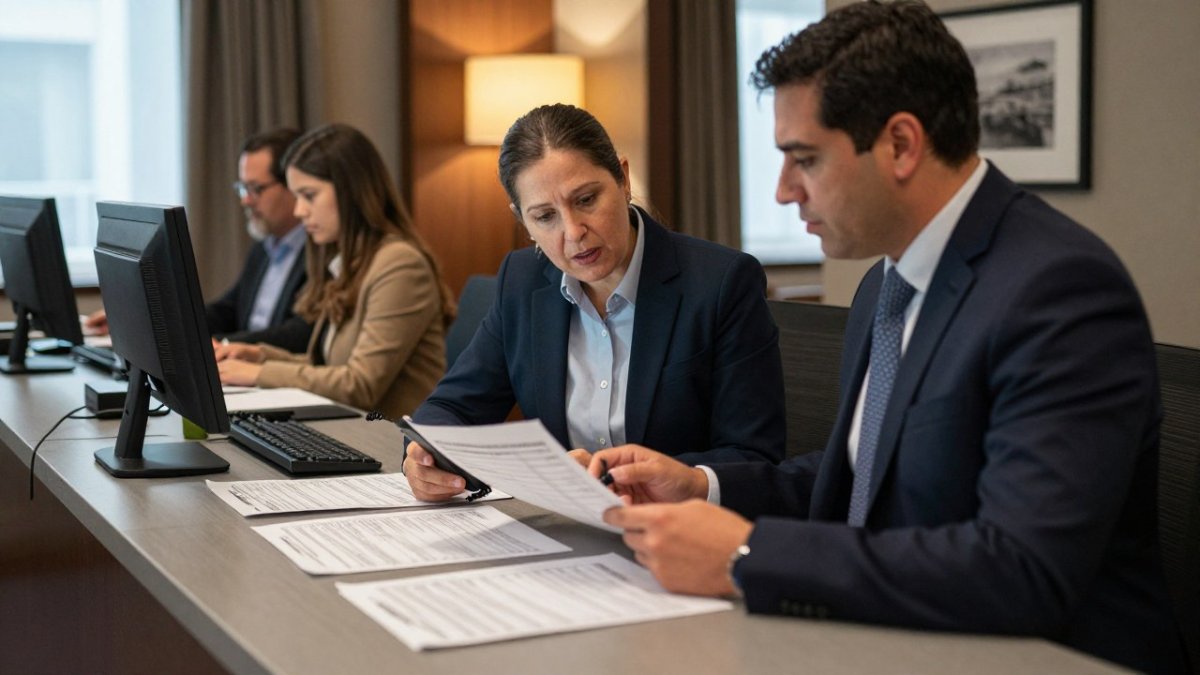
- Isolate systems and preserve logs before any reboot
- Call your insurer's breach response line and open a claim
- Engage forensic investigators and outside counsel
Documentation matters beyond compliance. Our list of records to document for a cyber insurance claim covers what adjusters ask for.
What to Put in a Data Breach Notification Letter Template
A data breach notification letter template is a pre-approved letter that tells affected guests what happened, what data was involved, and what they should do next.
Dear [Guest Name],
We are writing to inform you of a data security incident at [Hotel Name] that may have involved your personal information.
Keep the letter plain, specific, and free of speculation about who attacked you.
Getting Coverage in Place Before the Next Attack
Cyber insurance is what converts a ransomware crisis into a managed claim instead of a cash emergency.
The CISA systematic review of cyber incident costs shows that short-term response costs often understate long-term revenue damage. IBM's 2026 Cost of a Data Breach Report likewise tracks rising global breach costs, and Black Kite's 2026 ransomware report recorded 7,551 publicly disclosed ransomware victims from April 2025 through March 2026, a 24.9% increase.
If you would rather not wait on a broker to see where you stand, an Instant Cyber Insurance Quote gives you a fast read on coverage before the next attack forces the question.
Our guide to cyber liability coverage for hotel guest data explains how policies respond to guest claims.
A ransomware attack on a hotel is a legal deadline, an operational crisis, and a financial exposure at the same time.
Frequently Asked Questions
Does a ransomware attack automatically count as a reportable data breach?
No. A hotel ransomware breach becomes reportable only when personal information was actually accessed or acquired, or when the investigation cannot rule that out. Encryption alone does not settle it either: if the stolen data was unencrypted, or the encryption key was exposed, most state laws treat it as a breach. Document your forensic findings, because the burden of showing no compromise sits with the hotel.
How long do hotels have to notify people about a data breach?
There is no single national deadline. State breach notification laws generally require notice without unreasonable delay, and specific outer limits vary by state and should be confirmed with the official state source. Separate rules can apply to regulator reports and to ransom payment disclosures. Confirm the specific deadline for every state where your guests live, and log the discovery date, since every clock starts there.
Who needs to be notified after a hotel data breach?
Affected guests first, then the state attorney general or another designated agency where state law requires entity reporting, and law enforcement. Payment card brands and your acquiring bank have their own contractual notice terms, and your property management system vendor may owe notice too. If you operate under a franchise or management agreement, check who holds the notification duty before anyone sends a letter.
What records should a hotel keep after a ransomware incident?
Keep the forensic investigation report, the discovery date and time, containment steps, the data elements and guest counts involved, copies of every notice sent, regulator filings, and any ransom payment records. Several states now require disclosure of extortion payments. Your cyber policy will also require documented proof of loss, so a written data breach response checklist completed in real time is worth more than reconstructed notes.